silentgift

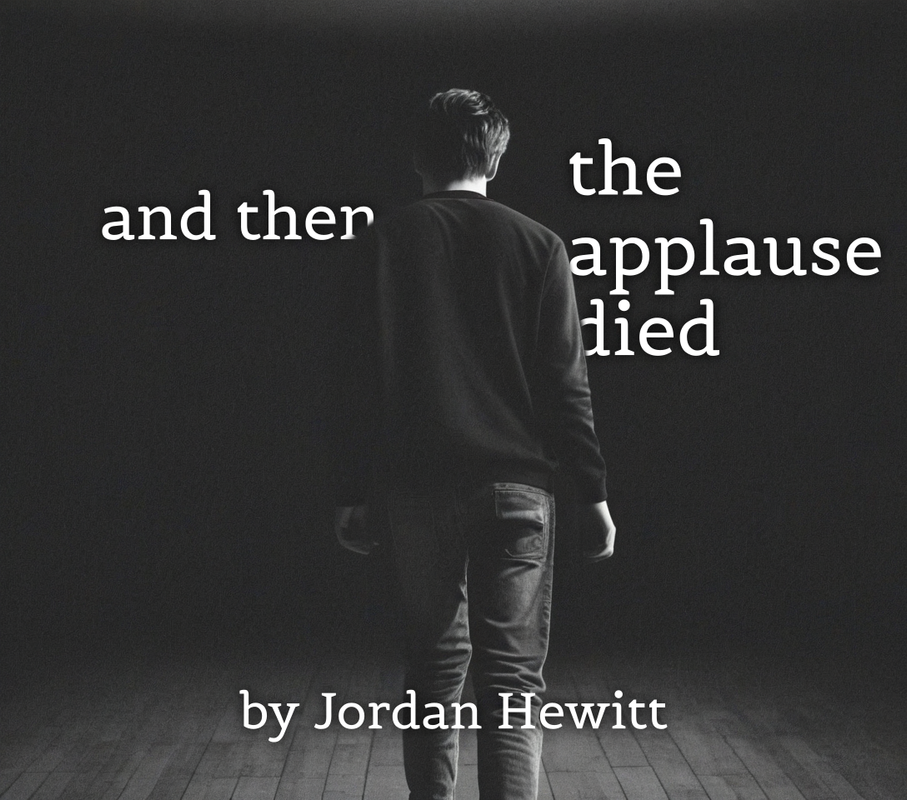
Cover Image. Photograph. No elements except for a floor and the subject, a 19-year-old man. We see the the back of him, and he's heading toward a dark, empty void. The feeling is foreboding, dark, and eerie

Sitting at the table, I held the meager piece of paper in my hand. On it was a single line of text. Across from me was my father. Standing a couple paces away was my mother. They were both looking at me expectantly, waiting for me to speak.

My mouth agape, I looked at my parents, contemplating disobeying them. I tried that before, tried not reading what was on the paper, tried delaying it. No, they wanted me to read it now, in their presence.

The world was expecting me to. I swallowed, took a deep breath, and read, “Each day that I grow into becoming a man—”. I paused, to see if they approved. My dad nodded. I continued. “—I'm grateful for all the ways you two have raised me.” The words didn't sound like me. They were written by someone else, someone who wanted me to say it.

They both relaxed. My mom sashayed around the back of the table and put her arm around me. “And we are delighted to have you as our son,” she said cheerfully without skipping a beat.

“Just remember to do what you're told, and no harm will come of you,” my father added, just as enthusiastically. “Our rules are here to protect you.”

The rules. I grew to acknowledge them, to obey them. Despite my hatred of my parents rules I knew they did protect me. I've heard stories secondhand from others—my parents, friends—of special people who had their own outer darkness, had their own doorways that captured their curiosity. The only thing they encountered was excruciating pain for several hours until death finally took them.

It was safe here. Whenever I asked why I couldn't go past the outer darkness, but others could, I was always met with the answer: “You're special, Ryan.” I remember one conversation when I was about five years old. I was sitting with my mom at the dining table where we often had these conversations.

“Special?” I asked.

My mother nodded enthusiastically, the light glistening in her eyes. Hair fell over her ear, and she was quick to tuck it behind again. “You have a special gift that makes going past the outer darkness dangerous.”

They both cared about me. And everyone I talked to (include friends) reiterated how dangerous it would be to go past the outer darkness. With death as the inevitable outcome, everyone was trying to keep me safe. How could I argue?

Still, my imagination ran wild thinking about what was beyond the outer darkness. What was it like? Was it just a series of rooms like this one? Was it just an empty abyss?

I often asked my parents about this. What was beyond the outer darkness?

“A world you might see someday.” “Everything that harms you.” “It's dangerous to ask such a question!”

So eventually I just stopped asking.

Everything would soon be revealed in due time, I reckoned. When I was ready.

It wasn't just me and my parents in the room. We would sometimes have parties, celebrations, inviting cousins I never knew I had. During those times it felt like the whole world was watching.

And I even had some friends that would occasionally come over. They would always ask about me, ask what I was interested in, engage in anything I wanted to do.

“Where do you live?” I asked my 11-year-old friend Cameron.

“Oh, just out there,” he replied.

The answer too vague for my liking, I pushed. “What do you do for fun?”

Cameron looked away, contemplating. My dad stepped into the room, his posture tense.

Cameron turned back. “Oh, lots of things!” And he left the answer at that, changing the topic to something else unusually quickly.

As I became a teenager, of course, they brought girls over. Most I thought of as friends. A few I fell in love with. The couch in the middle of the room usually became the cuddle-and-talk spot. I would talk with the girls. We'd get to know each other. And in those moments, it felt like the whole world watched with eagerness, seeing how our new love would bloom.

When I was sixteen I remember one specific girl, whom I was convinced I'd marry. Beautiful girl. She had a great sense of humor, a zest for life, and bright, fiery eyes.

After one memorable night of cuddling on the couch, still seated, she finally kissed me gently. “It's getting late,” she said, “My parents are probably worried.”

Normally I'd return the touch. Normally I'd follow her out. But for some reason, this time was different. Instead, I sat there on the couch as she started to get up, then a flame ignited, and I was overcome with desire. Outer darkness or not, I had to follow her!

With my jaw set I got up from the couch to follow her toward the door. Turning, she gasped, and quickly positioned herself to block me. “No, Ryan—it's dangerous! You'll get hurt—you'll—you'll die!”

“I don't care, Megan!” I cried. “I want to go with you.”

“Ryan, Ryan, please!” she begged, gently pushing me backward. “Don't do this. It's—it's—dangerous.”

“What's out there?” I asked her.

Tears welled in her eyes. She looked like she was contemplating saying something.

Now more agitated, I grab her shoulders. “Megan, what's out there?”

“Ryan!”

I turn behind me. It was my father. He came in from the other side of the room, joined with my mother. My dad looked nervous, but retained his composure. My mom looked just as shaken.

“Ryan,” my dad continued, “Megan seems like a good girl. Why are you treating her like this?”

I turned back toward a trembling Megan. “I—”

My dad continued. “Megan will call you when she gets home...won't you Megan?”

She nodded frantically.

“See, Ryan, there's nothing to worry about. You can let her go.”

“Yes, Ryan, I'll call,” she said desperately. She leaned forward and kissed me strongly. “I promise.”

I was starting starting to tremble myself, the bravado I initially felt now replaced with adrenaline. I stepped back, watching her slip into the darkness beyond.

An hour later the phone rang. I picked up quickly.

My parents were watching. The whole world was watching with bated breath.

“Megan?”

There was silence for several seconds. I heard a sigh. Then, haltingly, she said, “I think it's best...I think it's best if we don't see each other...anymore.”

“What? Why?”

“I don't feel...I'm not in love with you anymore.”

My mouth was dry. My mind raced, trying to think of something to say, something to keep her there.

“Goodbye, Ryan.”

Then she hung up.

Stricken, I fell to the floor and began to weep. My parents came along beside me, turning me at an angle, toward the light, to get a better look at my tear-soaked face. The world fell silent.

For months I questioned what I saw. I questioned my own perception. Everything inside me told me Megan loved me. Why did she suddenly grow cold?

After recovering from the shock, I asked my mom about it. She revealed that Megan moved away, and stressed that I'd never hear from her again.

Why would I never hear from her again? The situation felt frustratingly convenient—and not convenient for me. Just everything was clicking, the rug was pulled out from under me. Not everything was as it appeared. It felt like strings I wasn't privy to were being pulled for someone's amusement to watch me suffer.

That wasn't the only event that had me questioning, though. My entire life was marked by similar experiences that had me questioning my very sanity.

For instance, on time when I was thirteen my mother had just finished a school lesson, meticulously tucking her hair behind her ear.

“It's not real!” I heard a voice scream. My mom jumped. “None of this is real! Get out of here, Ryan!” The voice continued screaming, then it became stifled and muffled; finally, it fell silent.

My mom continued to nonchalantly gather up school supplies.

“What was that?” I asked.

Her motion continued smoothly, uninterrupted. My mom, bearing a grim smile tilted her head, “What was what?” she asked cheerfully.

“The—that woman screaming?”

She made a point of frowning. “There wasn't any voice,” she said emphatically.

“I heard a woman screaming something at me,” I insisted.

My mom pouted, thinking, then she turned aside, still keeping an eye on me. “John?” she called.

My dad came in the room. “What is it, honey?”

Still looking at me, Mom said, “Ryan says he heard a voice.”

My dad forced a chuckle. “Was it my terrible singing?” he chided.

“No,” I insisted, “it was a voice. A scream. A woman was screaming none of this is real.”

My dad frowned. “Oh, that's—that sounds serious. I think we should have that looked at.”

They brought in a psychiatrist. I went through eight weeks of psychotherapy, rather, eight weeks of hell in order reorient what I considered normal.

“Your mother says she didn't hear a voice, and was sitting in the same room as you.”

“Yeah, but—”

“And your father says he didn't hear a voice, and he was in the next room.”

“Yes, but—”

“So then it's only you who's claiming you heard the woman.”

Eventually I conceded that it was in my head. But it did little to put the my parents' minds at ease: I was put on a medication regimen with excruciating side effects for the full eight weeks of the sessions.

Those eight weeks I remember those sessions so vividly, so painfully, that next time I heard a voice, I simply ignored it, smiling at my mom who was smiling right back at me.

***

That night after my parents forced me to read the note about becoming a man (they had always forced me to read many notes) I went to bed, but my young male mind raced with rage just as much as it raced with curiosity.

After all, I was 19 now. An adult. My parents didn't need to make decisions for me. I was my own person, and—damn it!—I could make my own decisions. If I wanted to risk death because of my curiosity, that was my decision, and my decision alone!

Resolute in my decision to face the darkness, I knew I had to be quiet about it. I listened for noises in the next room over, hoping to hear signs that my parents had gone to bed.

Instead, my parents were whispering in dining room, but the whispers soon died down, and I heard footsteps. The light dimmed. I got up from my bed, and opened it slowly. Thankfully, it didn't creak.

I saw the back of my dad heading into the outer darkness.

I tiptoed out of the door, across the floor, and I once again approached the precipice of the outer darkness. My eyes were fixed on the void before me. How soon would I experience the torment my parents warned me about? Was it immediate? Or would I get too far in, experience the the anguish, then lose my way to return to safety?

It didn't matter. The desire was too great.

Two steps from the edge of the darkness.

Then I heard a voice behind me. “Ryan?”

A chill ran up my spine. I froze. Then, realizing I had nowhere to run I turned back around. The look of disappointment on my dad's face tore me apart.

“Dad I'm sorry, I—”

“Go back to bed.” He said. When, I didn't move, he added forcefully, “Now!”

His firm command set my feet in motion, and he continued to eye me with contempt. “I thought we raised you better,” he said.

“Dad, I'm sorry!”

“We'll talk about this in the morning.”

And we did. We'd had these talks before, but not with as much passion, and with far fewer arguments thrown. Here I was, now a man, arguing against my parents.

“Ryan, we love you, you're safe here! If we lost you—”

“That's not your call to make, Mom! That's my choice!”

“We'll lose you,” she said, tears streaming down her face.

“Ryan, look what you've done to Mom!” my Dad raged, dramatically extending his arm toward her. “You've upset her.”

“I know, and I'm sorry, but I have to find out what's past there!”

“You will do no such thing. You live under my rules. I promised you and mom that I would keep you safe, and I would do exactly that.”

“You have to let me go.”

“Never!”

“I hate you! I hate you both!” I screamed, then, instead of running to my room, I ran to the bathroom, the one place where I felt like I could hide from the world. I huddled against the corner, grabbing my knees, and wept silently.

I don't think I ate the rest of the day. I don't remember going to bed.

But I remember waking up. My eyes popped open. I thought I heard water running. Was I dreaming? No, I heard it again, water running, on both sides of the bed.

Slowly, I sat up in bed, then moved my feet over the edge. Immediately, my bare feet hit a cold pool of water. Instinctively, I pulled my bare feet back from the water.

Looking down I noticed it wasn't just a pool. It was the entire floor. And rippling around my the bed, the water was rising. Already it was ankle deep.

With the water rising, I realized that I'd soon drown here. I had to get out of here.

But where? I've lived here my entire life. Leaving would mean the death of me!

“Ryan! Ryan!” I heard my parents shouting.

By the time I made it over to the door the water was already up to my knees. It took immense effort to pull the door open. Both my parents waded over to me, flashlights in hand.

That's when I noticed it was darker than usual. Besides lights coming from unusual sources, the flashlights my parents held provided the only other source of illumination.

“Ryan, we have to get out of here,” my dad told me.

“Where?”

“Come on!” he cried.

Before I could move my mom was already halfway into the outer darkness.

“Wait,” I said, halting. “The outer darkness, I'll die!”

My dad glanced behind and scowled at me. His mouth moved like he was trying to find the right words. Finally, as the water rose to his thighs, he barked, “Don't you get it? If you stay here you'll drown. Let's go!”

I followed him, but it was slow going. The current was getting stronger; the stronger it got the longer it took to move forward, which meant the cold water was rising faster than I could run. By the time I got to the threshold of the outer darkness, the water was already up to my chest. A table nearly bumped into me as I floated by.

I stood near the entrance, my heart pounding in my chest. All my life I was told this would kill me. Now I'm told it will save me. Despite the rising water, I was still afraid.

The light of my dad's flashlight passed over the outer darkness, illuminating the world beyond it, showing me the true terror of the void.

But, to my surprise, it wasn't a void at all. The truth was mundane, boring, and a disappointment.

Beyond the outer darkness was a room, about ten feet wide. On the opposite side was a concrete wall. Along the wall I spotted ropes which ran vertically toward the ceiling, but I lost sight of them.

Dad was in front of me, half walking, half swimming toward the ropes. I looked for Mom, but I didn't see her.

Where was Mom?

More chillingly—where was the world? Was the whole world in this flood?

I didn't have time to ponder. The water was up to my chin, my feet now unable to touch the ground, and, terrifyingly, I knew I couldn't swim. I finally reached the ropes and pulled myself above the waterline, alongside my dad, dripping wet and breathing heavily.

Then the realization hit me: I was past the outer darkness, past the point that everyone said would lead to a long and agonizing death.

Was this it? Was this the death they were talking about?

Between me trying not to drown and trying to make sense of the current overwhelming situation, I barely heard my dad speak. “Ryan!”

I looked over. My dad nodded toward a green door. Above it was a sign that was lit red with the word “EXIT.”

“Head toward that door,” he said. “You can't swim so I'll go first. Once I'm in, push off with all your strength. The current's pushing in that direction, so it should be easy.”

I was still nervous, but I nodded. Now, all my hope fell on my father, the one man in my life who taught me to fear the darkness. But now that I was in it, he was my only salvation.

My dad pushed off and swam toward the door. I thought he would get swept past, but at the last second he grabbed the handle, braced himself against the wall and pulled. Entranced, I watched as a new room opened to by perception. I saw what looked like stairs. But part of the room was underwater, meaning my Dad braced against part of the stairs in order to be in line to catch me.

Once he steadied himself, he motioned for me to follow.

Terrified, I still held tightly to the rope, but I felt the strong current tearing me away. I was still looking around me in all directions, trying to make sense of this new environment. What was all this? Why was it so deadly?

“Ryan!” my dad called. His eyes were pleading, desperate. “Come on!”

I readied my legs on the wall, ensuring they were primed for a final push. I let go, then launched myself in the water. Just like my dad said, the water carried me toward him. But before I reached the doorway, the current changed direction. Lunging forward, my dad grabbed my shirt, pulling me back toward him. Water streamed over the back of my neck; my head went under water; I started gasping for breath, receiving brief reprieves of air and sputtering and coughing, before I was pulled under again.

Right when I thought I'd drown, my dad pulled me up out of the water, and hoisted me on steps above him.

Weary from exertion, we both sat there, catching our breath.

“You're—your alive,” he said.

I was alive. But would I soon be dead? Sudden fury enveloped me. Was my dad the devil or my savior?

I glared at him. In a rage, I stood up, and ran up the steps. The steps led out of the floodwaters toward a dry hallway with a right angle turn. I ran down both, my bare wet feet slipping on a linoleum floor.

He called after me. “Ryan...Ryan!”

The hallway was lit very eerily. I could only describe it as raw, unkempt, unnatural. But I didn't try to figure it out. Instead, I ran toward a set of double doors, and ran headlong into them. I stumbled as they flew open, and I found myself in a large room.

The room itself was dim, but panes of glass revealed an environment I'd never seen before: a torrent of water running in a large room I'd never seen before, equally as eerie and unnatural as the light in the hallway.

What was this place?

I heard my dad's footsteps down the hall. But I turned and before me I saw a wall. Even in the unclear lighting I could make out some writing, and an image transposed on the wall.

What stood out the most was the picture. I recognized who it was immediately.

It was a picture of me.

Not just a single picture, but a series of pictures. At different stages of my life. Walking, playing with my friend Cody, receiving a medal for having graduating high school.

It was only then that I saw the large text above the montage. “COME SEE RYAN'S FULL LIFE.”

And the text below: “OPEN 24/7”

I staggered backward, falling into water that was now a rising shallow pool in the room. Stunned I stared at the wall art. I saw my name, I saw my likeness, painted onto a wall, advertising people to come see the star of the show—me! What kind of people came here, desiring to gawk at me for their own amusement?

I barely noticed my dad rush up to me, grabbing me. He begged, “Ryan, Ryan, Ryan!”

“What is this!” I demanded, throwing my hand toward the art. “This is my life?”

Surprisingly, he started to grow angry and frantic, pulling me toward another door as the water started to rise. “What do you want?” he demanded. “Huh? You want to undo what's already been done?”

“You knew? All this time?”

“We'll talk about it later. Right now, Mom's on the roof. We need to get up there, too. Now!”

He trudged off, the water now up to his knees. He opened a door and stood there, waiting. Heaving, I looked back at the advertisement, the amalgamation of my life summed up on a graphic with the sole purpose of corporate profit.

I screamed in a voice of violent rage, letting everyone who's passed by the artwork know how I felt. After that brief moment of catharsis I followed my dad through the door. We walked up a few flights of stairs before coming to a metal door, our faces illuminated by a another red EXIT sign.

He looked at me. “Are you ready?” he asked.

I nodded, unsure what to expect.

He opened the door. I saw a view of something I couldn't comprehend. Out of curiosity and fear of dying, I quickly ran out of the doorway onto another floor.

And the World, the True World, opened up before me. Everything was dim and dark. I looked above my head and noticed a dome above me, and all around me. How far it went, I couldn't tell, but there were very faint dots of light twinkling closer to the bottom of the dome. It seemed like a monumental engineering project, whatever it was. Some sort of large screen, perhaps?

And then below me, boxes, rooms, surrounded by water. Was this normal? Since we had to run, I got the impression this wasn't normal.

My stomach turned. Here I was, 19, trying to understand the world. It was bigger than I could have ever imagined.

I was so entranced by the moment I barley noticed my Mom was on the roof. “Ryan!” she cried, then ran to hug me.

Maybe it was just the simple action of her approaching me, anxiously grinning, arms outstretched. Or maybe it was deeper. Maybe it was all the questions I had, all the opaque concealed answers from my parents that were now bubbling to the surface. In my fury, I pushed her away and screamed at her to stay back.

Startled, she stepped back. My father, stared at me, but made no motion to correct me. I think he could see how I was feeling.

“Are you my parents?” I demanded. “My real parents?”

Stunned, they stared at me. Even as the dome's dim colors overhead became more vibrant, I saw the color drain from their faces.

Not satisfied with their silence I pushed further. “Are you my parents or not?”

My dad cleared his throat. “Y—yes,” he finally said. “You were born on stage.” I scoffed, looked away. “That was the beginning,” he continued.

“And were you ever going to tell me?'

They both looked at each other. “We—we're under a contract,” my dad said.

“Were,” my mom corrected.

I stared at them in disbelief. Standing ten feet from me, neither of them seemed to know what to do.

Finally, my mom spoke. “But we still very much love you,” she said. My dad's head nodded in impassioned agreement.

They loved me? Seriously?

Disgusted, I turned away from them. My mom started to follow me, but my dad put a hand on her shoulder, halting her.

I sat on a large box on the top of the building, overlooking what I determined was the city. Again, I considered how people lived. Did people get around in boats? Or was this truly a catastrophic event I was witnessing?

I heard a buzz, then a thunderous pop toward the other side of the building. I turned. My parents had also turned. “What was that?” My mom asked curiously.

A minute passed. Nothing happened. I turned back to ponder and brood.

The dome was now changing colors and getting brighter. It started out as a cold gray-blue color, but was now becoming more reddish at the bottom, but mostly blue. And the blue seemed to be dominating the display on the interior of the dome. A bright light that nearly blinded me rose up from the bottom of the dome, illuminating the destruction around us.

Why was it doing that? Was it like my lights as I was going to sleep? This place was bigger place than I could imagine, and I noticed for the first time that no one was looking at me. No one was cheering at my successes or groaning at my failures. Not even my parents seemed as interested in me as they had been my entire life

Hot tears filled my eyes, and I felt them run down my cheeks. I again wondered what I'd do now. How can I even begin to understand a world that's been hidden from me since birth?

My nostrils detected an acrid smell. Just then I heard my dad gasp. I looked toward the other side of the building and I noticed gray smoke rising from below.

My dad rushed to the side. Putting a sleeve over his nose he peered down. Then, quickly turning away, he suddenly bent over, coughing. He hurriedly rushed toward my mom. “The building's on fire. The water must have shorted something.”

“Won't the flood put it out?”

My dad shook his head. “The source is above the water line. And the water stopped rising.”

Both turned their gaze toward the non-smoky side of the building. Their second thought—as well as mine—was the water. Was that a way out? Thirty feet below the muddy water filled with countless dangers and debris. Then the gut-wrenching realization came that we'd have to jump. Would we survive? My parents might be able to, but since they kept me physically constrained since birth, my chances were slim.

But would that be so bad? Choosing one death over another?

Because right now, I was nobody. Up until now I believed my life had a meaning. I was here to perform for others. Everything about my life boiled down to how I looked, how I spoke, how I interacted with everyone in my room, and I was punished or rewarded for how I interacted with this construction. Is that reality? If it was, I wanted no part of it.

“It's spreading!” My dad cried.

He was right. Already I could feel the ground feeling warmer.

“They should rescue us soon,” my mom said, trying to console bot her and my dad.

They scanned the edge of the dome for several minutes. Suddenly, looking away from me, they became frantic. They began jumping up and down, waving their arms in the air. “Hey! Over here!” they shouted.

I looked closer toward the edge of the dome. I saw a black dot that was growing larger. The black dot soon took the shape of a machine floating in the air as if on a string. I also heard a loud roar from what I assumed to be an engine or motor as part of the machine.

Was it here to rescue us?

I looked down into the murky water. Just thirty feet down, a couple seconds of falling, a few moments of terror being unable to breathe, and then I can end it all. The heat rising up from the fire was becoming too intense, and I had to decide soon. I started coughing violently from smoke, unable to catch a breath.

Within a minute the machine hovered above the platform we were standing on. A door opened and a man on a rope emerged. He descended onto the roof. My dad helped my mom get a harness strapped around her. She ascended with the man toward the opened door of the machine.

My dad waved his arm, beckoning me. His eyes were wild, pleading. “Ryan, come on,” he said, before he was overcome with a spasm of coughing fits.

The man descended, again. He, too, urged me to come forward.

Fire, water, or rescue.

I chose rescue. I ran up to the man. I was placed in a harness. The man reeked of sweat and sewage, but the smell was a relief from the overwhelming suffocation from the smoke.

My feet left the ground, and I was overcome with panic. I gripped tightly to the man, who—what it seemed—empathically grabbed me tighter, too. I looked down, only to hear a brief command of, “don't look down,” so I opted to close my eyes tightly until I was told to climb into the door of the machine.

Once I was safely aboard, I observed the inside of the machine. I saw my mom sitting against a far back wall, guzzling a bottle of water as a doctor leaned close to her ear and peppered her with questions. Two strangers—a woman and her teen daughter—sat against the opposite wall. They were both covered in dirt and grime, too in shock to register anything.

The doctor then turned to me and asked a series of health questions before running a quick checkup. In that time, the rescuer ascended with my dad strapped to his torso.

All three of us were now onboard the machine. Now that we were, the machine's engine changed pitch, it tilted, and I felt it move away as the world outside tilted with the motion. Despite the terror, curiosity still gnawed at me, and I scooted on the floor toward the front of the machine. Behind me, two people seemed to be operating the machine. I paid them no attention, and instead, looked out toward the city underwater, taking in the new information.

We seemed to be heading farther toward the edge of the dome. I wondered what would happen? Is there a hidden platform I couldn't see? Did a door open up?

But despite being overwhelming me curious, my brain was spent. I gave up guessing. I promised myself that whatever I saw from here on out, I'd accept it as normal.

The rescuer by the door leaned in closer to me and yelled in my hear to be heard. “I'm sorry, this may be an odd question, but...do I know you?”

I didn't answer. I simply stared at him, too tired to do anything. The rescuer then looked at my dad, then my mom, and finally put the pieces together. His face brightened in recognition. Then, when a vibrant grin on his face, he turned back to me. His answer was expected, but nonetheless empty and hurtful. “I do know you! You're that kid that was born on the stage! My wife and I saw you when you were just eleven. Those tickets were so expensive, but it was so worth it!”

Beaming and giddy, the man said some more things, seemingly more to himself. My dad, noticing the exchange, gently put his hand on the man's shoulder and yelled something at him, but I couldn't make out what he said. The rescuer nodded, his grin dissipated, and he continued to look out the door at the flooded city below.

My dad then met my weary gaze. Slowly, he scooted closer to me. He had two food bars in his hand, and extended one to me. I only acknowledged the action with a blank look. He retracted the food bars.

“I know you don't trust me,” he said, leaning into my ear. He paused and swallowed, seeming to choose his words carefully, “but your mom and I do love you. I promise.”

He waited, expecting some sort of response, but I gave none. He turned away and something to himself. He might not have expected me to hear him, but even under the roar of the motor, I could still hear him cursing, “Damn Christopher Avery. Damn him!”

I continued to watch us fly closer to the wall of the dome until my eyelids became too heavy and I fell asleep.

About 2 Tickets for Home. I recently watched a video by OSP on the concept of an unreliable narrator. I've heard about the concept before and considered it intriguing. Included in the video was discussion about narrative voice, too (1st person / 3rd person / etc.). Most stories I write are in 1st/2nd person. So this was my assignment: write a story in 3rd person as an unreliable narrator. And this is the story we get! 😆

Enjoy!


You're not home yet. In fact, while I was on my way home I got a text from you saying you were getting groceries. Really, Jenna? I think you can have gotten groceries another time. I always get them in the morning. But apparently have had clients you have to see. Rich middle aged white couples with their 3 pomeraneans who turn their nose up at their 4-million dollar house because it's not close enough to their golf course; where you don't stick up for yourself like I would and say F off, and instead opt to put on a happy face and make a sale.

I'm sitting on the couch when you get home. I have the TV on, mindlessly starting one show, then moving on to another. Then I open up one of your shows, think it's dumb, then go back to a rerun that I like. Finally, I hear you open the door, and the two grocery bags your carrying crinkle beneath your heavy sigh.

Still seating, I look toward you. “Thanks, babe,” I say.

“Yeah, sure,” you say as you set the bags down on our small dining table with a thud.

Normally I'd help you out. But today, Jenna, I was a hero. You see, today it was in the high eighties. Most of my crew called out sick. Not me. I stuck with my crew digging the ditch today so that the telephone company can lay a fiber-optic cable—or something like that. Proof that I'm not the wimp you think I am. I lie in wait for the opportunity to tell you to tell you.

But then I remember something. I remember I asked you to get boxers, since I already threw out the holey ones, and I went commando today. I get up from the couch and rifle past the lettuce and trail mix to get to them. As I pull them out I see they're the wrong brand.

You don't seem to notice my frown, but instead say, “Could you put the sugar in the top shelf? I can't reach it,” as you continue to put away a couple spices.

Sugar? Really? Did you really think I wouldn't notice? “These are the wrong brand.”

You pause, your face is flushed, and you take the package in your sudden trembling hands. “Really? Oh, my gosh, I'm sorry. I checked.”

I take it back and slam it down on the counter. “They're Ben's favorite, aren't they?” I ask.

You make an exasperated sigh and don't say anything. You continue putting away groceries.

“Stop seeing him.”

“Can we talk about this later?”

“Make sure of it,” I say, while at the same time, you said something like, “We have already talked about it a thousand times.”

I let you cool off from blowing up at me. After all, we still have The Office to get through. Once I think you've calmed down, I tell you news that would make you want to tackle me to the ground and make out with my naked body. “I dug a ditch today,” I announce. “In the hot sun.”

“Oh, wow, cool.”

“You mean...hot,” I say, smirking.

You barely notice as you fold up the 2 paper bags. I sit down. I then realize the sugar is still out. I get up again, and make a huge point of grabbing the sugar. Then—as you rudely demand I do—I put it away on the top shelf. Nothing but silence from you as you rearrange the fridge.

“I put the sugar away,” I announce as you throw the spaghetti in the cupboard.

“Thank you,” you say.

“Now, about Ben.” I had toyed with the idea of waiting until later, but I want you to talk with me now.

I stand up straight and confront you in the small kitchen area. you brace yourself steady against the dining table. “What about him?” you ask, and you must be reading my face, because then you say, “I just can't stop seeing him, Carl. He just got divorced.”

“Are you just gonna go with the brother lie again?”

You are about to say something, then wisely shut your mouth, looking aside. Then, you say something else. “Me getting you the wrong boxers had nothing to do with Ben.”

“What did it have to do with then?”

“I don't have a photographic memory, Carl.”

I know you enough to know that if I badger you, you're not gonna budge. Instead, I move back to the sofa. “My coworkers even remember my underwear. We talk about our favorite brands all the time at lunch. What? You and your girlfriends don't share your favorite bra?”

You don't respond. You've learned to know when I won an argument. A couple minutes later you came back into the living room, holding the long receipt next to the unopened package. “Look, I'll return them,” you say in a soft voice. “That better?”

I pause slightly, then nod. “Yeah.”

Your shoulders relax. “Thank you, Carl. I'm sorry. I didn't mean to make you angry.”

“You'll get better. Say, you wanna continue The Office?”

“I think I've had enough of the real Office,” you groan, making your way back to the bedroom. “But sure. Give me a minute to get changed into something more comfortable.”

You always changed when I wasn't around, I realize then. What were you doing? Fantasizing about Ben as you were looking at yourself naked in the mirror? A shame. Soon you'll see that I'm your man, Jenna. You'll find Ben isn't an alpha like me. Then Ben's going to be out of the picture and it's going to be me.

I already made a lot of sacrifices for you. When I lost my shift job at Amazon you were able to hold down two jobs for the bills, all the while I was discovering my passion, and was writing a book. Well, I was going to get to writing the book, but your nagging was getting in my way, interrupting my creative flow. I had a great idea about a great king, except that nobody knew he was great. The king was...I don't know...I don't remember his name. But it was good enough that I emailed a publisher about the idea and then the publisher sent an email back asking me to finish the novel as soon as I could. Not just one email, either, but a few, asking me to hurry it up. I told them good art takes time, and I'd start writing soon. But then we got in the huge fight. You accused me of just sitting on my ass doing nothing.

So I got a job like you kept nagging me to. And I had to email the publisher to tell them the bad news. They said that people you love can often get in the way of a great opportunity, which is exactly what happened. This is all your fault, Jenna. You could have been living with a famous best-selling author. Instead, you're stuck with a sweaty ditch digger.

Even as a ditch-digger, though, people recognize greatness when the see it. Like my boss, for instance. The first day on the job my boss and I sat down with me for lunch (I was told the boss never sat down for one-on-ones). Even so, we ate our lunch, talked, and laughed, and talked some more about our lives. Stuff that would never interest you. Finally, as we neared our lunch break, my boss put a firm hand on my shoulder, just as a father would. “Carl,” he said to me, “Nobody believes in you. And that's a shame. But I see you. I see you have potential, you're going somewhere. You are truly special, Carl.”

Tears welled up in my eyes and I and thanked him. I explained how even you—my partner—didn't believe in me, and he nodded. “That's a shame for your girlfriend,” he said. “But I'm here for you—whatever you need,” he said, or something like that. It was such an emotional bonding moment it's hard to remember exact details.

It wasn't just the utility job. Every every boss I had for each job had the same amount of respect for me, including Amazon. It was almost instantaneous, too. A stark contrast to how you treat me. But I hold my tongue. I'm a better man for it. I think you should try that sometime.

Finally you come out of your bedroom in pajamas. Your makeup is off, though hints of your professional mascara lingered. I'm still in my work clothes. I'm too tired to take them off. Sorry about the couch, the grease. I'll clean it off later. I promise.

“You always promise,” you say incredulously. “You mean it this time?”

“Here, if it'll make you feel better I'll put out a rag.”

I always did clean up. You never noticed when I did, even when I did it when you were in the same room; only noticed the times I didn't.

Later that night—once I clean the grime off the couch as best I can, and take a shower—I try to cuddle with you, but you say you're not feeling it.

Fine, Jenna. I try to get close to you and you push me away.

I start to think you've given up on me. But then the next day when I arrive home, a table is prepared. Candles are lit. spaghetti smelling of garlic and tomatoes have been dished out onto large plates. You're standing above the table in an evening gown, looking at me expectantly.

I'm confused. “Um, what's this for?”

“For yesterday,” you say sheepishly. “For blowing up at you.”

I takes me a second to take it all in. I didn't think you had the humility to apologize. “Wow, Jenna, thank you,” I say. Despite all the extravagant preparations, you still hesitate, bouncing your leg, looking over the table. I reassure you. “Come here. It's alright.” I approach you, and you lean onto my chest.

You sigh. “I just know you've been so stressed and you try to do so much,” you say. “It's the least I could do.” You pause, then say, “I also exchanged your underwear for the right brand.”

We both chuckle. Then, we have dinner. I'd even forgotten when you blew up at me the other night. In fact, I feel things have settled down; and—I hate to admit it—but it's starting to feel like you want to get close to me again.

Later that same week I see a travel ad for Kenya. Shots of street vendors in Nairobi, the beach in Mombasa, and wild Animals—the kind people are used to seeing on Nat Geo. You kept saying you wanted to take a trip, so I bring it up.

You walk in the door. “I'm done working with these clients!” you groan coming in the door. “They don't like anything I show them!”

“What's stressing you?”

“My clients,” you proclaim loudly. “I mean, come on! We don't have the most exciting housing market right now. I can't give you everything you're wanting”

“You want to take a vacation?”

“Tell me about it!”

“No, Jenna...” I pull out my tablet that shows a vacation special. A happy smiling American couple holding out their hands to feed a giraffe.

You sputter. “You've got to be kidding me.”

“Why not?”

“We are not going to Kenya,” you say with finality as you walk toward your bedroom.

Once you close your door I wonder if you're going out again. The other night I saw you with your “going out” clothes on. Nothing necessarily to attract another guy's attention, but I know you have your way of going undercover. Only when I took a peak out the window did I see you on the street corner waiting for a car. The driver...none other than Ben.

I'm more than patient, Jenna. I play the long game.

The next morning is my day off; but I'm in the mood to watch online videos early. So I pop on a documentary of interior design in Kenya. It's narrated by a woman with a smooth, sultry Swahili accent. I'm paying little attention to what's actually on the screen. I just wait until you walk by and say, “Oh, that's gorgeous? What's that?”

You're so easy, Jenna. “Oh, just some lady who specializes in Kenyan interior design in. Apparently the government is loosening restrictions for housing developments so developers and designers are getting more creative.”

“That's...cool,” you say with a vexed expression. You move on, but I can tell the seed has already been planted.

And soon enough, a few nights later, you say, “Okay, I might be interested in Kenya.”

“Might?”

“Yeah, I mean, it looks like a beautiful place. And, yes, most people in Nairobi speak English. But just think—what if we get stuck in a rural part of Kenya where people don't know English. I don't know Swahili and don't have time to learn.”

“Babe, it's fine. Kenya's a tourist country. Plus, you have a translator on your phone.”

You sigh. “I guess. I mean, it's such a different culture. I don't know if I can.”

But then you come around. And buy the plane tickets. I tell my boss I'll be off on vacation. He gives me a great bear hug. I hear him give a heavy, heart-felt sigh. “You've done so good around here, Carl. But don't worry, we'll manage without you for a bit. Have fun.” He even hands me a paycheck early to tide us over.

We plan our trip. Overnight flight, spend a few days in Nairobi, checking out some of the cool sights, buying some of the cheap avocados, and experiencing all Kenya has to offer. Then, once settled, we'll take a train out to Mombasa, spend a night out on a boat, splashing in the luminescent water online influencers teased us about.

On the day of our flight we arrive at the airport, get our tickets, and board our flight. It's a night flight. I hope that you cuddle with me, but you instead spend your time with headphones on, staring out at the blue Atlantic ocean until the sun sets and you fall asleep.

We soon land in Nairobi. We pick the first Kenyan restaurant we see on Google maps; this place would be crazy expensive back home, but only stretches the budget a little over here. When our meal arrives, your eyes go wide and you whisper to me, “Oh, my God, this is amazing!”

The night's only getting started!

But still, you keep to yourself. You don't trust me yet. And honestly, Jenna, I don't think you ever will. But we'll take this one step at a time.

But before dark—at the urging of our guide and locals—we check in to our rented home, breathe a sigh of relief, and go to sleep—in the same bed, but separated by that same unbreakable wall that's been between us for the longest time.

After adjusting to the people, the culture and (more so) the climate, we took the long train to Mombasa. It had a sleeper car, dining, and most amenities that a long-distance train had.

At one point we sit by an elderly couple. You talk with them. I just want to be left alone. They seem way too happy about life and way to old to have a right to be that happy, but they talk; the talk about where they grew up, the kids they had, their church friends. They ask about you—what brought you on a trip dragging me along (I react with a slight bitter nod at this comment). While you say you are currently a realtor, you also mentioned you wanted to eventually become an interior designer. And, once they raise their eyebrows with interest, you offer to show them pictures from your phone.

Realizing I couldn't pull you away from the annoyingly cheerful couple, I leave and sit by myself on another section of the car. I see a mother sitting with her kids. She's excitedly pointing out the window and her two kids are shouting, “Lion!” Looking to where she's pointing, I spot a lioness leading her pride through the shrubs, open mouths tasting the air. How stupid that the lioness hunted the prey. Females don't have the tenacity to hunt. Only males have the strength and capability to (1) travel great distances and (2) survive in the Savannah sun before pouncing on a kill that everyone thought would get away.

By the time I come back, you're still talking with the old couple, but they're teaching you Swahili. All three of you are laughing your heads off at your own pronunciation.

“Jenna, dinner,” I say. “I'm getting hungry.”

You whine toward the couple and throw in a simple, “I'm so sorry; thank you,” and they do as well.

We mostly eat in silence. At one point you burst out laughing.

“What's so funny?”

“Oh, just something Mary said,” you say.

“Who's Mary?”

“The wife of the couple I was talking to.”

I pretend that I'm not bothered by that. I don't know why it even bothers me, but it does. But I'm patient. Like the lion on the hunt I saw earlier.

We finally get off the train the next morning, and take a rideshare to our rental home. The guy taking us doesn't speak a lot of English, but talks to himself in Swahili, while blasting his radio with the latest Kenyan hits, also, mostly in Swahili.

We finally arrive at our rental; we thank the driver (you in terrible Swahili) and gather our bags. While the places around here aren't a garage dump, they're certainly not Beverly Hills, either. Our place has keyless entry. We figured that would be better since the site said the host's language was Swahili.

That's not to say there weren't English speakers in Mombasa. In fact, that night we went to a local bar and ran into another couple from Scotland. We drank some with them, chatted about differences between America and Scotland, then went back to our vacation rental.

For one of the days, we skipped the rental and opted for one of the “floating hotels” that are available for tourists in Mombasa bay.

During the day it's a floating mass of food, sweat, people, and music. For the most part we keep to ourselves. You're on your phone. Occasionally your face lights up and you smiled after seeing something funny. I see you sending pictures to Ben.

I couldn't take it anymore. I turn and look at the ocean. Then look toward the shore. I see beach-goers in the distance.

Finally the sun set. You come to join me. I'm a bit startled and look at you funny.

“You said you like romance,” you say. I do. “I'm not very romantic with you and I want to start. You're too good of a man.” I smile. You're starting to come around. We fall asleep in each other's arms.

The next day our raft docks at shore. We return to our bed and breakfast in Mombasa. We spend the rest of the day in town, but mostly just taking it easy. Watching Kenyan soap operas. Using up the last of our food. We know that tomorrow we'll taking the train back to Nairobi, then rushing to the airport to take an evening flight to back home.

The next morning we eat leftovers we had for dinner the night before.

“What's been your favorite part of the trip,” I ask you.

“The boat trip was kind a cool,” you say. “I also liked talking with that elderly couple.”

That's because they have what you can never get! I think. But I smile.

“What about you?” she asks.

“I loved getting to know you more,” I say.

“Oh,” is all you respond with.

I had hopes that you'd come around by now. Then you say the stupidest thing I've ever heard from you: “I can't until we go back.”

Go back? To what? My dead-end job as ditch-digger? Your job as a crappy real estate agent? Keep in mind, this whole trip was my idea, Jenna. You just agreed to pay for it. What would we be going back to?

“Oh, don't get me wrong,” you continue. “This trip has been nice, but I'm ready to go back to normal.”

I let out the warmest smile I can manage. “Yeah, me too” I say, squeezing your hand.

You glance at your phone. “Ooh, we got 2 hours until the train leaves,” you suddenly say. “I'd better take a shower.”

“Alright. I'll start packing.”

You had already packed most of your things the night before. Mostly what I see are essentials—Keys, memorabilia, wallet, clothes, toiletries. I pack my own things first. Then, because I plan ahead, I hail a rideshare car.

Then, I take your wallet, passport, keys and phone. I put them in my bag.

Before you turn off the shower, I shut the door. The car pulls up.

“Where are you going, my friend?” the driver says in a thick accent, flashing a friendly smile.

“Mombasa train station,” I say, and shut the door. The car pulls away.

And later that evening later, I arrive back in Nairobi.

During the train trip I was imagining what it must have been like for you.

What it must have been like to get out of the shower, the towel wrapped around your body, when you would have called out for me, but heard no answer, then decided to just start packing. It must have been frustrating to pack your things, look for your phone, your wallet, and your passport, and not see them, and then call the landlord on the emergency landline phone, frantically trying to communicate across her broken English. Beyond that, my imagination goes blank. It doesn't matter. I'm on the flight, and can almost imagine you down below, perhaps stepping out of a car of a kind stranger who was just on his way to Nairobi, pointing your fists toward the sky and flipping the bird to the jetliner you know is mine.

But next to me is an empty seat. In front of me are two hot blonde girls, college age. They're bubbly, open, friendly.

“Hey, you,” one of them says. “What's a good-looking guy like you traveling to Kenya all by yourself?”

“I came with my girlfriend,” I say, “But I ditched her.”

The girl's eyes narrow and she grins. “Good,” she says, “She probably she deserved it!”

The two giggle to themselves, and then I get their numbers and save them in my phone.

And if you're wondering, no, I don't know what happened to your phone. It must have met the same dark fate as your passport and wallet, tumbling from a train window into the dark depths of a river somewhere between Mombasa and Nairobi.

And rest assured, my dear, I still wouldn't have any idea what happened to you. Not even when the plane lands, and I head back to our place. And I still wouldn't have any idea where you were, not even when your “brother” comes to the door, tears in his eyes, begging me, that if I know anything... Of course, I'll be feigning shock (you wouldn't need to worry about that) covering my mouth to complete the performance, and I'll respond with trembling lips that I had no idea, that we had decided to take separate flights back and you must have gotten lost.

And don't worry about your stuff, Jenna. That will all be sold on Craigslist. The stuff I couldn't sell on Craigslist I'll sell at an estate sale, bringing up “my late girlfriend” with an impregnated pause whenever someone asked about your computer or stack of books. And before the police ask too many questions, I have that planned, too. With the money I get from selling your stuff I'll move to another state, knowing full well it would probably be months before the American and Kenyan embassy can work together to bring you back. By then, I'll be gone.

But that's for later. For now, I'm sitting on a plane that's crossing over the Atlantic. and I'm making eyes at the two girls in front of me. You should be proud of me, Jenna. For once, I'm feeling like a man.

Ms. Avery paused and the entire class looked toward the classroom's PA speaker that had chimed once to indicate an announcement. Mr. Washington was speaking.

“Good morning, Emerson High,” Mr. Washington said cheerfully, although Evyn noted an edge was in his voice. “We've just received a notification from NASA that the sun has exploded. We have approximately 15 minutes until all life on earth is boiled alive. That is all.”

The PA clicked off.

A heavy silence fell over the class, a silence broken only by Ashleigh's shrill exclamation. “What!”

The PA chimed again. “Oh, I almost forgot. Our ladies varsity volleyball team beat Jefferson 5-0 at regional last night and they're going to face Whitney High School at state. Let's go Tigers; hear them growl,” he ended, though the 'growl' was noticeably less enthusiastic than usual.

Again, stunned silence. “This has to be a prank,” Evyn concluded.

“No, it's true,” Logan said, holding up his phone to a news page. “All news stations are reporting it.”

Ashleigh started hyperventilating. “Oh my gosh, we're going to die. I can't take it, I can't take it.”

“It must be a rather slow nova,” Devon said. Usually quiet and having an IQ off the charts, every class seating assignment gave him first dibs on the first row of seats.

“What?” Evyn asked.

“The sun is about eight light minutes from earth,” Devon explained. “ Since it will take fifteen minutes for us to meet our demise, the energy shock wave must have been low energy.”

“Shockwave? Energy?” Ashleigh asked.

“Yes,” Devon continued. “The sun's outer surface is millions of degrees Celsius; it's inner core is even hotter. And that doesn't even cover the lethal radiation that the sun produces that the earth's atmosphere protects us from.”

Asheligh groaned and collapsed on her desk.

“Devon, I don't think you're helping,” her quieter friend Meagan told Devon.

“Alright,” Ms. Avery said, getting the class's attention. “Page 86. Derivatives. Let's go.”

“We're learning now?” Evyn asked.

Ms. Avery blinked. “Why, yes.”

“Why?” Sam demanded. Everyone turned to Sam, his bulking muscular frame sat in the back, beefy neck flush with anxiety underneath his blonde hair.

“We only have fifteen minutes!” Evyn protested.

“Fourteen,” Devon corrected.

“Okay, we have fourteen minutes!” Sam said. “Why are you making us learn calculus?”

“So that when we meet our maker, we'll be that much more educated,” Ms. Avery explained coolly. “See, I already learned so much about the sun from Devon!”

“I don't want to die!” Ashleigh yelled.

“Me neither!” Logan said.

“We have to do something!” Sam declared.

“Oh, my poor pupper.” Ashleigh said, tears running down her face.. “She's all alone at home. I want to be here for her.”

Devon suddenly blurted out, “ASHLEIGH I LIKE YOU AND I WAS GOING TO INVITE YOU TO PROM.” The entire class, now stunned with silence, turned toward Devon. Devon put his hand over his mouth and turned redder than Sam's bulging neck.

Then they turned to Ashleigh, who was even redder than either of them.

“Oh, that's—that's nice, Devon,” was all she could say. Then, she said, bitterly cheerful: “But looks like prom's canceled!”

Sam stood. “No, it's not! Me and my girlfriend are going, and so are you, Ashleigh! Are we going to take this sitting down?” he roared. “Ashleigh, how long did it take you to find the prom dress?”

Ashleigh blushed. “Well, funny thing. It was actually this girl on TikTok that was showing it off, and she was doing all these crazy things like running up a wall and doing gymnastic flips in this dress. It was, like, so cool to see her do this—”

“Okay, great,” Sam interrupted. “Are you really going to let all that time dress shopping go to waste? Devon, are you gonna let our solar system's star stop you from getting an A in this class? The sun exploded. So what? This is our planet. We didn't evolve from primordial goo just to have our insides turn to plasma before Elon Musk becomes president of Mars. The sun may be bigger. It may be meaner. But we have more passion. If we all stand together, the radiation shockwave that's about to hit us won't stand a chance!” He stepped onto his desk, puffed his chest, and stood akimbo. “Who's with me?”

Nobody said anything. Not finding anyone to join his side, Sam stepped down. “Well I'm going to do something!” He took his textbook, smashed out the protective glass of the fire extinguisher, and started to leave the classroom.

“Where are you going?” Ms. Avery demanded, staring Sam down.

Sam became small all of a sudden. “I, uh, need to go to the bathroom.”

“Take the hall pass.”

“But we might die in—”

“Hall. Pass.”

Sam growled and grabbed the rubber squeaky doggy toy shaped and painted like a cherry pie with the number “3.14” markered on top. He walked out of the classroom.

“Can I go home?” Ashleigh pleaded. “My pupper needs me.”

Ms. Avery sighed, seemingly missing the word “home” in all the chaos. “When Sam gets back from the bathroom you may go.”

She became more hysterical. “I'm not gonna graduate! I bought a special dress to wear at graduation!”

“I bet the dress is gonna be...hot!” Logan said, raising a hand and high-fiving a classmate.

That caused Ashleigh to burst out crying again.

“Logan, can't you be nice to Ashleigh for even five minutes?” Meagan begged.

“Can't you have a sense of humor for even five minutes?” Logan asked.

“We're going to die in 14—”

”—10,” Devon corrected.

”...10 minutes. We can remember to be kind, right?”

There was commotion outside. That's when everyone turned to see Sam storming out into the school parking lot. He held the extinguisher close to his body and yelled out, “Say 'helo to my littel friend!” before freeing the cone and flailing the hose into the sky. Even through the window everyone could hear his threat. “You see this, sun!” Sam cried, releasing a test spray of the extinguisher. “We're more powerful than you can ever imagine! Turn back now or we will destroy you!”

“Who wants to learn derivatives?” Ms. Avery sang cheerfully.

“Aren't you at all concerned about something—like, I don't know—the sun that's gonna kill us all?” Evyn asked.

Ms. Avery was unmoved, and she scowled. “The State of Wisconsin does not pay me to be concerned about events outside of my control!” Ms. Avery said, stamping her foot for good measure. Then she smiled and said sweetly. “That said, let's turn in our textbooks to page 85.”

Devon stood up. “Well I'm concerned. And Sam's right. We can't let the sun vaporize us while we're sitting down.” He walked up to Ms. Avery's desk and grabbed her water bottle. “I'm joining Sam.”

Barely flustered, Ms. Avery kept her sweet smile. “You don't have a hall pass,” she said professionally. “You'll need to wait until Sam gets back.”

Sam, who now had the extinguisher on the ground and was flipping the bird to the sky, his entire body emitting a guttural war cry.

Devon, with a confident smirk, whirled his head toward Ashleigh, who looked sideways in embarrassment. Then Devon whirled back to Ms. Avery. He ripped off his glasses. “Consider this my hall pass!” He declared, slamming his spectacles down on the teacher's desk. Devon then marched toward the door, but ran headlong into the door frame. He sheepishly turned back briefly, before embarking again out the door, only to run face-first into a bulletin board of unreturned test papers with students' names in big red lettering. The whole contraption crashed to the floor.

Ms. Avery signed as she made her way over to her desk. She picked up Devon's glasses and extended her hand toward him. “Devon, just take your glasses.”

Devon waved his arms in front of him as he gingerly made his way over. He then took his glasses, put them on again, then regarded the class timidly. “It—it looked a lot more heroic in my head.”

He was met with awkward silence. “To battle!” Devon yelled suddenly, then charged out the room.

With nothing better to do before the sun would cut the school year short, Ms. Avery's Calculus class watched as Devon joined Sam, who was positioned, once again, with the fire extinguisher pointed offensively upward toward the sky. Devon opened up the water bottle and doused himself with half of it. “Saw this strategy in Chronicles of Riddik,” Sam explained.

“How much time is left?” Ashleigh begged in the midst of hyperventilation.

Logan held up his phone with a timer ticking down. “Less than a minute!” 45 seconds to go.

Devon checked his watch, too. He and Sam, still holding their weapons at the ready, counted down until impact. “Ten, nine, eight, seven, six...”

Ashleigh closed her eyes. “I can't watch!” She cried.

Logan gripped his phone, eyes wide, staring out at the window.

Ms. Avery was writing down homework; she had changed their due dates to earlier that originally scheduled.

Just then the PA chimed. “Hello, Emerson. This is Principal Washington again. Just got word from NASA again. I have good news! Apparently there was a glitch in some of the equipment. The sun didn't explode.”

Everyone breathed a sigh of relief. Mr. Washington continued. “It's still burning and will continue to burn for the next five billion years. I hope no one was doing anything drastic.”

Not too drastic, Evyn thought. He looked out the window and continued to observe Sam deploying the extinguisher foam into the wind next to Devon who was throwing the last remnants of Ms. Avery's water bottle toward the still-burning sun.

Picza Cover


The sunlight broke through the early morning clouds, heating the ground and creating an eerie steam. Daphne only partially noticed this. Perhaps as a young girl she would have stopped and admired the beauty.

But for now, she was sitting at the table, 3 bills opened, 2 unopened. With her lunchbox was packed for the day, if she left now she'd be at least 15 minutes early to the bus, so she figured she'd find any extra time to see if they could pay the bills.

Just then the front door opened, and Daphne heard the birds chirping. The smell of the fresh morning air came wafting in ahead of Dillon walked in, who—she knew by now—always smelled of polluted water, sweat, and the ocean bay. He wearily trudged in, dropping his duffel back on the floor. “Hey, Daph,” he mumbled.

“Hey,” Daphne said, comparing 2 bills side-by-side. “How was work?”

“You know, usual. Work.” He went to the fridge and grabbed a beer.

“One of these bills is your health insurance,” she told him as Dillon snapped open a bottle. “What should I tell them?”

As Dillon swaggered into the living room he held up his middle finger.

“And the mortgage?”

Same response—the bird.

She smiled bitterly. It was no use asking about the other 2.

“Any news on the raise?”

“Silence.”

She sighed. Dillon turned on the TV and started scrolling through streaming shows. Daphne spent a few more minutes on the bills before tossing them back on the disheveled pile. Then she fetched her purse, lunchbox, and coat, and headed out the door. She kissed Dillon on the check. “Get some rest,” she said.

“Will do.”

She waited at the nearest bus stop. As soon as the bus pulled up to the stop, she boarded, popped in her earbuds, and sat down next to an elderly Hispanic lady whom ignored her. The bus pulled away. Daphne had to squint in the stark sunlight that darted in and out of her eyes in between the cityscape.

She got off on Market and 8th, and began her journey down the park blocks, past the treed area where, during the summer, street performers tossed hoops and played music; and was about to cross the street onto 10th when she noticed something odd in the bushes. She couldn't quite make out what it was.

Normally she'd ignore those mysteries and move on, but the curiosity got the better of her. She stepped back from the crosswalk, and peered further into the bushes.

Peeking out from under the bushes was a set of large eyes. They were looking directly at her.

“Who are you, little guy?” Daphne asked.

Just when she was about to get a good look at the creature, The eyes disappeared and the bushes rattled. Darn it! She had to find out what it was! Daphne looked both ways to see if anyone was looking at her, then adjusted her purse, and parted the branches to see if she could spot the creature.

It was gone.

She straightened up, frowning. She spotted something out of the corner of her eye. She turned and fully saw the creature, timidly looking up at her.

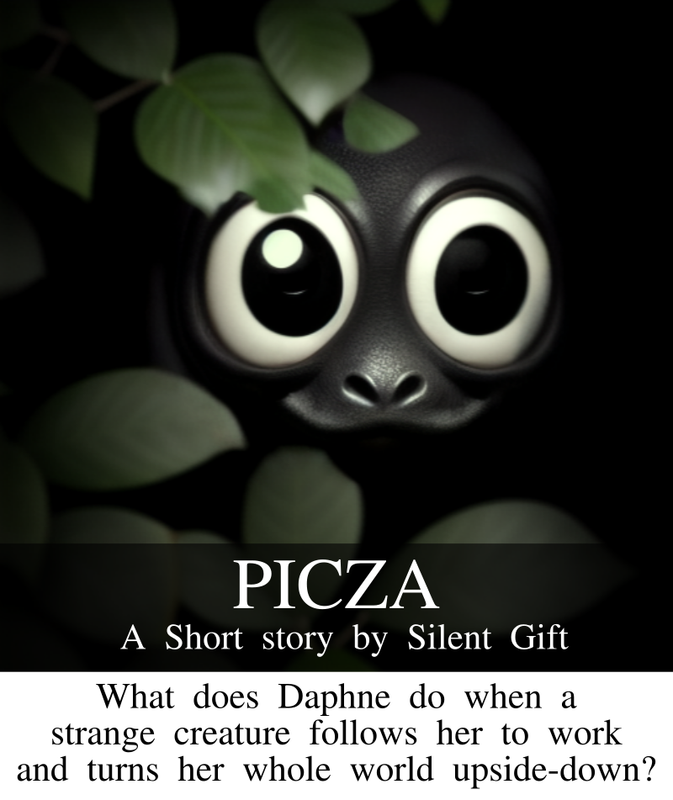
It was about the side of a small cat and walked on four stubby legs; its gray skin was about the same texture as a rhino's or hippos, and it's mouth was slightly beak-shaped. But it's eyes, facing forward, were cartoonishly large—white around the edge of the eyeball, but containing large black pupils..

Read more...

First Friend Cover


I glanced at the clock once more. Projects were due in 5 minutes.. I again checked the screen in front of me; the scene I imagined weeks ago was now displayed.

Often when we did these projects I fantasized about the result...the model rendered in front of the class, it's colors splashing across the floor as if the fantasy scene were destined to spill into reality. As with all my creations, it was based heavily off a popular character kids thought were cool...Lomoo. I mean, who doesn't like Lomoo? He's on cereal boxes, backpacks...and a feature movie is even on the way. The 3-foot purple-skinned weirdo with springy antennas filled my 12-year-old imagination back then.

I finished the last texturing, saved the project, and sent it to the queue. Mr. Garickson was seated in his chair, looking up at the queue filling with names. My normally animated and goofy teacher seemed almost pleased as he swiveled back and forth in his chair, each students' name popped up on the master screen. I was in position 5 out of 17 students.

Leo was number 4.

I met Leo in the 3rd grade and quickly discovered he was one to avoid . He was often mean to me. In the third grade he'd stand in my way in the hallway, then move, to get more in my way, and then laugh and say, “sorry, was I in your way?” When he got bored of that he'd tell my my shirt was stupid. Then he'd tell ugly girls at school that I wanted to marry them.

And worst of all he was a better 3D modeller than I was, as evidence by this project. I burned with jealousy.

His model was 2 ninjas fighting. It was even interactive, where anyone could control one ninja by mirroring movements. He invited Mr. Garickson to try. Although Mr. Garickson was in fairly good shape for his age, his futile attempt at faux martial arts brought the class to tears.

Leo walked past me. “Better not be more of that stupid Lomoo,” he taunted under his breath. I was already feeling jealous. Now I was feeling belittled. What came up was a sickening bile of mistreatment; with no one to save me.

Mr. Garickson invited me up. I swallowed and tried to push aside the thoughts of unfairness. After all, he seemed to like my projects. Isn't that all that mattered?

I showed the model. He just hopped around an environment I made. It definitely wasn't interactive—not like Leo's project. I didn't say much. I couldn't say much. One of the girls cooed. “Ooh, he's so cute.”

I sighed, but heard a raspy, “Nobody cares!” from Leo sitting at the back of the class. At that moment I really wanted to run out of the room and cry; but I already did that last week, so they already saw me as an emotional wreck. With a trembling voice I finished up, “...and that's it.”

If Mr. Garickson saw my mask of bravado, he didn't show it. Instead he nodded. “Thank you, Tony. Next...Morgan.”

I tried not to look at Leo, but I knew he was looking at me. Any time he wanted to bother me, he'd just look directly at me, staring into my soul, willing me to cry.

And it worked. I had to turn aside. My throat tightened. The sobs were coming to the surface. But I pushed them down, so only hot tears tinted my eyes.

I had to think of something else. What did I have to look forward to? English? Yeah because of—oh, I couldn't, no—she's too...oh, the play! Yes! The play. I forced my mind to focused on the school play. When I got the major part I fell on the ground in joy. How could I, as friendless as I was, get chosen to be a part of a play?

That's it, I thought hopefully with the emotions fighting to rise to the surface, I just need to rehearse my lines in my head....'Father, wake up...your customer's here'... as I continued to rehearse my lines my throat eased, the

Plus, after this period was lunch. I had a chance to get away from Leo, to sit by myself, and read my book. Usually, I sat by myself. The table I chose typically was in a corner and not too dirty. Whenever someone sat at the table they either put their head down in their phone, ignored me, or were special ed students, seemingly unaware of anything except their caretaker helping them eat lunch.

This time, I was sitting alone, engrossed in the pages of my book, afraid to glance at my watch to discover how much time had passed. Then I was interrupted by the sound of someone laughing musically, almost like a flute.

My heart fluttered and I looked in Becky's direction.

I couldn't comprehend how she even—well, existed! The way she looked was graceful, mature, but still youthful. I couldn't help but try to understand her. I had been aware of her since probably kindergarten, but as I saw hints of a woman in her appearance I couldn't help but feel warm. Her face was dark and mysterious, almost masculine. And I was ashamed to admit it...I liked the gap between her front teeth.

I would tell my dad about her sometimes. How I felt about her. He would laugh, as if reminiscing about days gone by. “Ah, girls. I remember.” And he'd often encourage me to just tell her how I felt about her. I don't think he ever understood how nervous I felt.

What would I say to her? That I liked her? Is that what they call it? It seemed so counter to the way books describe it. I wasn't carried away in fantasy. I wasn't showing how bravado I was in order to win her affection. I just felt—stuck.

The lunch bell rang, pulling me from my thoughts. And again I played in my head what it would look like if Becky and I were friends. But then I realized friends don't hold hands like I was imagining, or kissing like I was envisioning. That's what boyfriends and girlfriends do...that's what teenagers do who ride motorbikes and get in trouble for bringing beer in the house.

The nervousness ended as soon as I continued my post-lunch classes. I couldn't wait for play rehearsal after school. I felt like I was actually contributing, giving people a reason to laugh or cry. It felt good.

Classes ended, the last bell rang, and before long I was in a rough costume. The “real costume” was still in the works, and I'd wear that later. I was facing the “house,” as Mrs. Archer called it (where the audience sat), but at this point it was empty, save for Mrs. Archer, who sat in a front-row seat, the script in front of her, meticulous and cryptic notes scrawled on a sheet of paper.

The Maker, played by Chris, hobbled about, as only a young boy playing an older man could. He was pantomiming projects, only to be interrupted by Annie—played by Brooklyn—who exclaimed “knock knock,” in lieu of the door not yet set up.

Uh oh! I had a line, but I suddenly spaced on what it was. Stupid, too, because I had rehearsed this scene, out loud and in my head, even going so far as to use a line rehearser app on my phone, as a suggestion from my dad. As the other actors glanced at me, my stomach fell and I had no choice but to call out, “Line.”

”'Could that be Annie?'” Mrs. Archer read. But between that time, Leo—standing stage right—scoffed, and whispered snidely, “Tony, it's not that hard.”

The theater was silent. I imagined myself if I was performing. Everyone would be looking at me. Now it was just the entire cast, standing under the orange lighting; and Mrs. Archer, chin resting in her fingers, a bemused smile on her face so you were never sure if she was disappointed or pleased. And then there was Leo, offstage, smug; with Parker rolling his arm in an impatient “hurry up!” motion. Fully humiliated, I swallowed, took a breath, and continued, my voice coming out in a squeak “'Could that be Annie?'”

I felt sick. Everyone now felt I was holding up the show. The remainder of the scene was only a few minutes, but felt like an eternity, especially when Mrs. Archer had us go back a few lines, or encouraged a line to be said a little louder. But all I wanted to do was escape and have a moment to myself. Finally, the scene ended and I exited stage right. But I could still feel Leo eyeing me, ready for attack. As I was about to exit backstage, Leo stepped in front of me, just like he used to do in third grade. “Sorry, am I in your way?”

“Leo, leave me alone!”

“Gotta go somewhere?”

I felt tears coming to my eyes.

Leo rolled his and stared up at the ceiling. “Oh my God, now you're crying. That's why you don't have any friends. Grow up and stop crying.”

I suppose we were being way too loud, because Mrs. Archer told the scene to pause. “Is something going on back there? Leo?”

That was my breaking point. Tears came flooding out. I started to sob. I rushed past Leo, and flung the stage door open. I just wanted so much to be alone. No, I wanted a friend. Someone by my side. But being alone, ruminating on heartless words by ruthless bullies was more palpable than being in the throes of their arrows.

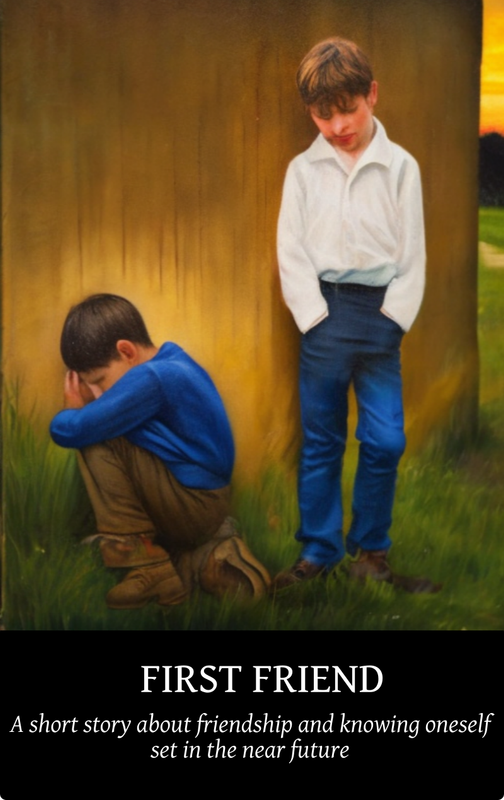
Finding a quiet corner near the band room, I sat down and hugged my knees. The band was currently in band practice, and they started up again, the muted drums and horns drowning out any sound coming from the theater. When I thought about the band, I was struck again with jealousy—they were a team. No one was an oddball, singled out. They all played together, even if—by the sound of it—a few were out of tune.

A door open down the hall and Mrs. Archer walked out of the theater toward me, her lips were taught. As the door closed I noticed the scene continuing without her direction. I felt a pit in my stomach. I was singled out. Mrs. Archer stood above me, staying silent for a few moments, allowing the moment to settle. The band in the other room paused for a moment as the band director gave directions. Finally, Mrs. she spoke in a soft tone, “What happened, Tony?”

I replayed the scene in my head and suddenly felt so stupid. I wished I wasn't there to be the target of humiliation. I wished I didn't exist. Other people—other boys—weren't as much of a cry-baby as I was. The only defense I had for my outburst was, they said mean things. Other teachers said I needed to toughen up. My parents said I needed to toughen up. I knew I needed to be stronger, but I couldn't muster the courage to stand on my own.

Mrs. Archer felt the silence. Whether she was growing impatient, I didn't know. To break the silence, she said again, “Tony?”

I knew I needed to confide in someone. Might as well be Mrs. Archer, I figured. I tried to speak, but the words caught in my throat. “Leo, he—” was all I could get out before bursting into tears once again. Mrs. Archer knelt down and put a kind hand on my shoulder. “I'll talk with Leo myself, Tony. I don't know what he said, but he had no right to talk to you that way.” She paused, probably seeing if that would help. I knew it was a way grown-ups tried to help me. But, like most adults, who didn't take care of Leo's constant bullying she just tired to tell me how to think of it.

“Don't worry about forgetting that line earlier. Happens to even seasoned actors on Broadway. You did the right thing by just moving on with the scene.”

I nodded. “I just want some friends.”

She softened further, and sighed. “I know. It's tough. My sister was the same way growing up.”

“Did she find friends?”

Mrs. Archer nodded, though not emphatically like I had hoped. She even looked a little grim. “It took a while. In her youth and even as a teen she had trouble fitting in. She wasn't the most popular girl, was chubby, and had really bad acne. I had theater to keep me occupied. She could never really find her calling anywhere. But I saw her grow and mature as an adult. It took a while, but soon she found friends that cared for her. She even got married to an amazing man. Mind you, she was almost 40 by the time she got married. But now she's happy...healthy...and has a lot of friends that support her. She reminds me a lot of you.”

I looked up at Mrs. Archer. She smiled. “We're about to do one of your scenes again. Are you ready to come in?”

“I don't think I can,” I said, burying my head in my knees again.

Mrs. Archer nodded, and then dispensed the advice I've heard from every adult before her. “Don't let Leo get to you, okay? Other kids have a lot of nice things to say about you.”

I nodded, pretending to take her advice to heart. I felt I'd been enough of a nuisance to her and the rest of the cast. Mrs. Archer sighed, then stood, and returned to the auditorium. The once theatrical troupe had now gone rogue, playing tag with each other and laughing. Before the door closed, Mrs. Archer clapped twice and called out, demanding an order to the chaos

I thought about going inside, but couldn't will my body to. But I also imagined Mrs. Archer reading my lines. The other kids would wonder if I was sick, or I'd gone home. Then kids would realize that Leo got to me and I'd run out, scared and crying. I shouldn't be this sensitive! I told myself.

Resolute, I stood from my corner. I didn't feel like crying anymore. I checked the time and saw it was 6:21. We probably weren't going to do another scene with me anyway. My dad would be by to pick me up soon, so I just stood outside the school, the cool night air drying my skin, warm and damp from crying. My dad soon picked me up; I spoke little, but my dad understood why. Later I found out he got a message from Mrs. Archer, explaining my trouble fitting in in play rehearsal.


That night, after my parents put me to bed, they lay in theirs, unsure what to say. My mom, the emotionally intelligent half of my parents, knew not to bother my dad if something was on his mind. She lay in silence, debating whether to pretend she was asleep.

“Mrs. Archer called after practice,” Dad finally said.

Mom didn't say anything. She forgot her sleep performance and began playing with her nightgown.

“I'm worried about him,” Mom finally admitted.

“He's young.”

“But he's at a pivotal age. He needs friends. Especially when he becomes a teen.”

“Is it really that important?”

“Well, yeah. Remember the Hendersons? How their son couldn't handle school and dropped out? Experts say making friends is vitally important, especially in your teens.”

Dad sighed. “We need to make our own decision, don't you think?”

Silence.

Mom spoke. “You were sensitive as a kid, too, if I remember right. You had to toughen up. So did I. Kids are mean but you and I had to find friends.”

“And if we didn't—?”

“Tony needs to learn, Miles.”

“How can he learn if all the interaction he gets is from—from—Leo!” he spat in a whisper.

“What other options are there?” Mom hissed. “There's nothing we can do for him short of telling kids to be nice to him.”

Dad kept silent. In the darkness, he was probably scowling, thinking. “This has been going on a while,” he admitted.

“I'm trying to help him.”

“I know.”

“I realize you are, too.”

“I know.”

“You have something on your mind,” she suggested.

“First Friend.”

Mom scoffed. “We don't have the money for one of those.”

“We have Tony's college savings.”

“But, we—I mean—no. No!” Mom propped herself up on her elbows.

“How can he ever hope to go to college? Just think when he hits teenage years. The emotions raging. I just think—oh, God—I try not to imagine it, but could Tony get so depressed he kills himself? Then we'd have the college savings, sitting there. And we'd be blaming ourselves for not doing something.”

She let out a disbelieving laugh. “We're not getting a robot as a friend for our son.”

Read more...

CW: violence, language, and brief sex

Inspiration

(feel free to skip to the story if you want.)

One day I was thinking about the common “girls like bad guys” trope often found in fiction. One prime example is an action/kind-of-romance film from the 70's Badlands. It does appeal to most people because it fits in with what society considers “masculine” and “feminine” traits.

At the same time, I also appreciate fiction that subverts common gender tropes. Wonder Woman subverted the “strong male hero must defend the feeble woman” trope effortlessly.

So I took it upon myself to do this with the aforementioned trope. In addition, within a compelling story, main characters must have an arc—each character has to come away with the story changed.

Using these rules, I explored this dynamic—a “good guy” is attracted to a “bad girl.” While I appreciate dark story tones, the tone of this story is darker than I anticipated.

Even so, I hope you enjoy it.


I rocked back and forth on my feet. My knees were cramping, too. I raised one leg behind me, and then the other. I didn't have the best shoes, but they were what the street ministry team encouraged. Why anyone in 2016 would want to talk with someone in a suit and tie was beyond me. I looked across at my partner, Amos. We both looked at each other uncomfortably and pinched our lips. He wore the same stiff suit that I wore, freshly bought from Brooks Brothers. I figured if this didn't work out I could use the suit for an interview—or a date with Jessica.

We simply waited (and prayed—right, I was supposed to be doing that) as people walked by, often quickly avoiding eye contact. This was day 2 of the ministry. I had the divine opportunity to witness to a homeless woman who I quickly found out was just talking to the air; and to engage in a heated argument to argue on the finer points of pre-mellenialism vs. post-millenialism with a grumpy old man.

Amos was able to talk with an Hispanic woman who spoke only a little English; he awkwardly invited her to the Spanish services Sunday afternoon.

I thought about Jessica. Her ministry. It sounded more practical than the one I chose. Even before she graduated high school she spearheaded an initiative working with the city to build houses for the homeless. Then she just basked in the glow of having done a good deed before the graduation ceremony.

We've gone on dates. Curly auburn hair, upturned nose. Slight frame. She spoke in a soft voice. Her temperament was even, because she said a Godly woman never raised her voice. “She's supposed to serve the church, her husband, and most importantly—God.” I have had moments where I've successfully broken through her humor wall. Just the other week during a grad party, I sat at her table, grabbed a powdered doughnut, then proceeded to puff the powdered sugar as I was chomping down on it.

Dating her wasn't a complete challenge: I felt a connection with her a few times. Mostly when we would hold hands. We both felt we were too young to kiss. But hugs were okay. And that cemented the connection. But most of our interactions involved deep philosophical discussion. A few times these even got heated. She wouldn't cry, but she would get very quiet. I would start to leave, then return and apologize.

“Will, you're out of high school. You need to set a direction in life,” my dad would tell me.

I knew it would be in ministry. But for the time being it was designing Fortnite skins. Too embarrassed to do it at home, I brought my laptop to a coffee shop, selling enough to afford a treat once in a while beyond my parents' allowance.

But here I stood in the middle of the city, and wondered if I could keep this up for the rest of my adult life. Did I care that most of these people were going to hell? Kind of...? If I was honest I was doing it mainly because I felt I should.

“Would you like a personal relationship with Jesus?” I asked a young woman who was walking with her husband. At least the ministry team encouraged creativity with the opener. I figured people liked relationships more than they liked hell.

The couple paused. The woman regarded me with intrigue, and used the free hand not holding a shopping bag to brush hair aside. The man shoved his hands in his pockets and strode behind his wife. “What?” the woman asked.

I swallowed. “Would you like a personal relationship with Jesus?”

“What religion are you?” the man asked directly.

“Um...Christian...Protestant. I belong to New Day, just down the road.” Without thinking I shoved a tract toward them. They stood there. I took the tract back. “Have you heard about Jesus?”

“Yes, plenty,” the man said, poison in his tone. The wife turned and put a hand on the man's chest to calm him.

I forced a smile and pushed. “And what have you heard?”

So many thoughts were bubbling to the surface of the man's brain, and he was having to sort out what ones to say while still maintaining his dignity. “I heard he cares about the poor, but he also wants money—like, three thousand dollars—that goes to prostitutes instead of the orphanage in Uganda.”

My face started to flush. “Oh,” was all I could say.

The man, confident in his argument, turned. His wife hid behind her hair and followed him.

I looked at Amos. He bared and gritted his teeth as if to say, “that was awkward.” I was too emotionally drained to answer back.

Fifteen more minutes went by. Three girls about my age walked past me. One had visible tattoos with brown hair highlighted with pink. Definitely unbelievers. I cleared my though. “Excuse me, would you like a relationship with Jesus?”

The one with dyed hair slowed down, stopped, and turned, causing the others to do so as well. She eyed me. I flushed. Her eyes were a friendly green, and her cheeks were fighting her coy smile. A distressed tweed jacket was unbuttoned, revealing a white tank top highlighting her youthful form. She wore leggings underneath her denim skirt. The girl approached me playfully. “Excuse me?”

The other girls stood nearby, eyeing their friend curiously.

Not used to this kind of attention, I suddenly felt warm inside. I couldn't feel my legs and I fought to gain control of my tongue. “Jesus—have you heard about him?”

With a very direct, solid tone she said, “Jesus. Fucking. Christ.”

I nodded awkwardly. “Uh, yeah.”

She turned to her friends. “I'll catch up with you.”

“Anna!” one of them scolded.

She raised her hand in a farewell gesture. They got the point and started walking off.

The girl turned back to me. “What about him?” she asked. She stood casually, her hands on her hips, never breaking eye contact.

“Um...he's God's son. He...uh, paid for your sin.”

“Oh, God, do I sin,” she said in a mocking tone, rolling her eyes. “I can tell you all the shit I've done. Wanna start at age three?”

“Well—I mean—I—”

“I called a boy a bitch. Started to go downhill from there.”

I laughed nervously. There was a time for grace, but there was also a time to stand on your own two feet. “I don't think you're taking this seriously.”

“You're right. Never could take things seriously. So, what about you? What have you done that'll send you to hell?”

In the workbook, we were encouraged to prepare our own testimony. I was a pretty good kid overall. There was a time when I was a bit rebellious with my parents, so I started to describe it.

“I murdered my dad,” she said solemnly.

I looked down, preparing a word of encouragement, about how no one is too far from grace.

“Haha! I totally got you!” She said. Then she put a hand on my shoulder. “But seriously, here you are in the middle of the fucking city, wearing clothes you stole from Abraham Lincon's grave, and you're wanting someone to talk with you?”

“Well, you're talking with me.”

She removed her hand from my shoulder. I secretly wished for her to do it again. “I felt sorry for ya.”

“I feel sorry for you,” I replied softly. I needed to maintain focus.

She smirked and shook her head. Her bangs fell into her face. “You're such a fucking liar.”

“I'm being honest.”

She stepped in front of my face. I smelled her—why? Why now? I needed to keep my head clear. “You're being religious.” I started to argue, but then closed my mouth. “Good boy—you're learning,” she said. She said it very flirtatiously, not condescending at all. “What do you do for fun? Do you have hobbies?”

“I—uh—sell Fortnite skins?”

“With crosses? Holding Bibles?”

I had to chuckle at that. “No, just weird creatures. Goblins. Werewolves.”

“I'm an entrepreneur,” she said, beaming. “Of sorts.”

“Oh, that's—cool.”

She paused, and looked into my eyes. Paused for a second, then said. “Get your head in the game. Life's too short to wear a suit.” With that, she walked away. I found myself not able to keep my eyes off her legs in the denim skirt. She walked with an attractive confidence that I craved.

My head still buzzing, I turned toward Amos, who had his eyebrows raised in a “how did that go?” expression. I nodded, unsure whether I felt guilty or alive.

The evening ended quietly. My phone chimed my alarm, indicating quitting time. We were supposed to do this all week, but in shifts. I was set to take the day off tomorrow. Amos collected the remaining tracts and put them in his car. “So what was the girl talking about?” he asked. “Didn't see you praying with her.” He save me a slight smile.

“Oh...it's—nothing. She was already saved.”

“Really? Wow, she seemed really friendly. Remember, don't mix business and pleasure,” he said, winking. Then he closed the trunk, and we both got in to drive back to the church. I was later picked up by my parents.

The next day I sat in the coffee shop, making more skins and checking the statistics to see what people liked most. I was suddenly aware of someone in front of me. It was the girl from yesterday. I looked up. Unsure what to say, I just looked into her eyes.

Today she was wearing a long-sleeved dark purple shirt and jeans. “Well, well, well,” she said. That same sly grin toward one cheek. “Fancy meeting you here.”

“Yeah, I'm getting some work done today.”

“Oh, Fortnite skins?”

I nodded. She had a really good memory.

“Can I see them?”

I turned my laptop around. She took a seat beside me. I tried to hide my excitement. Tried to play it cool. It just felt so natural. I turned back to my screen. I had designed a creature that looked like a cross between a spider and a scorpion, walking like a human. Her face brightened. “That is so cool! How did you come up with that?”

I shrugged. “I guess when I was high.”

She shot me a look, snorted, then turned back to the screen.

I was unsure what to say in this situation. I then remembered Jessica. Were we exclusive? Would she accuse me of cheating if she saw me with this girl? Before I thought, I said, “Can I buy you a drink?”

“Mocha,” she said, interrupting me. “Peppermint. Extra sprinkles.”

I closed my laptop lid and ordered with the barista. With my heart pounding in my chest I hoped the baristas wouldn't see who I was with...and then tell my parents. Word would get around to the church that I was dating a sinner. Then my chances with Jessica would definitely be ruined.

Once the mocha was ready, I handed it to her and set it down.

“You're name's Anna, right?” I asked. That wouldn't hurt, right? I'm just getting to know her.

“You haven't tole me yours. You do have a name, right?”

“To be honest a crack in the earth opened up and hell spat me out just the other day.” She chuckled. “Name's Will.”

“Nice to meet you, Will.”

“Why do you want to talk with me anyway?”

“You're cute.”

I blushed.

“A girl's never told you you're cute before?”

Now that I thought about it, Jessica never acknowledged it. She liked that I was driven, and that I was (for the most part) respectful. Lots of “husbandly” qualities, but she never said I was cute. For that matter, neither did I. Seeing someone as “cute” was a matter of the flesh after all, right?

“No,” I said.

I'd been warned missionary dating. Clergy told horror stories of men who would try to minister to a woman whom he was also dating, and eventually they got involved in Wiccan chants and demon worship.

But this girl seemed different. I also knew I was strong. Maybe I could leader her to Christ. “Did you grow up around here?”

She set her coffee down and settled into her chair. Thus began a conversation, a conversation in which I couldn't take my eyes off her. I forgot about my Fortnite skins. I forgot about her tattoos and died hair (or at least the fact that they were an indication of her sins). I forgot about Jessica. I forgot about my parents, and Amos, and the ministry team. I even forgot about the coffee shop we were in.

I didn't want the day to end. Eventually, coffee customers filed out. 4PM. Closing time. Anna and I were the only ones left.

I packed up my laptop. Anna and I continued talking. We walked toward the door. I was about to open the door, like a gentleman, but she aggressively pushed ahead of me and opened the door herself.

I thought about scolding her. But after our talk, I realized that would be useless. Instead, I bowed deeply. “Why thank you, my dear,” I said in a fake British accent.

“My pleasure!” she yelled jarringly.

We both laughed. For once in my life I felt...seen. Like I was connecting with someone.

We were about to head off in different directions, but she stopped me. “Tomorrow, some of my friends are having a party,” she said. “End of the summer fling. You know. I want you there.”

“I—”

She pulled out her phone. “I'll give you my number.”

I sent her a text so she got it. “Thanks,” she said, smiling. “I'll give you the details.”

Amos certainly noticed I wasn't in my suit. I said I accidentally spilled coffee on it and it was at the cleaners. “Souls are more important,” I said.

I'm not sure if Amos noticed me disappearing halfway through, dumping my handful of tracts in the trash, or when I boarded the bus, nervously riding my way to Anna's party.

The house was on a gravel road about a quarter mile off the bus route. By the time I got there the sun was starting to set.

I wondered if I'd miss the house number, but soon found out the house number was irrelevant, as loud music disturbed the serene nature of the rural gravel road.

I approached the rustic 2-level house. I slowed, peering inside the window. People were standing in groups holding red Solo cups. I heard loud talking. Occasionally someone would guffaw, throwing their head back, their laugh audible from where I stood.

I opened the door, and the already heavy atmosphere washed over me. Anna, in the middle of a conversation with friends, did a double take in my direction, then walked over, beckoning me as she did. “Will! Over here!”

She hugged me. But not like Jessica. She wasn't being careful with how I might interpret the gesture. Her arms formed to the crook of my back, and my arms flowed nicely over her nearly-bare shoulders. I felt a rush when my hands touched her tank top and bra strap.

The embrace lasted a moment, but the endorphins stayed with me. “Will, come on, I want you to meet some people.” She led me by the hand (we're holding hands!), and she introduced me to gamers. While I wouldn't consider myself a heavy gamer, I liked hearing about some of the campaigns the other gamers went on. Even so, my eyes kept darting back to Anna.

I soon found myself alone, out on the back porch with a drink in my hand (don't worry, Pastor Dave...it's just grape soda), feeling the cool night air over my skin. I didn't know these worldly people could be so—so—loving. They didn't pray. They didn't talk about the Bible. But to them I was already family.

I smelled the sharp musk of a cigarette. Turning to my right, I saw a young woman pull a cigarette from her lips. I studied her profile in the moonlight. Anna.

She turned, flicking some ash of the end. She approached me, and I took a reserved step back. “You don't like cigarette smoke,” she proposed.

I nodded curtly. She extinguished the cigarette on one of the deck benches and left it there, then continued her progression over to me.

I took a step closer to her, too. What was I doing? I was praying. Or was I? What I was I praying for? For salvation from this situation? For God to miraculously part the ground and have us physically separate? God, please, don't let that happen. I just need a taste!

I fought my urges, and eventually held her shoulders. She closed her eyes and smiled. “Closer,” she whispered.

I stepped closer, my hands wrapping behind her small back. She reached up and put her hands around my neck.

Why was she doing this? Was she asking for—? Only one way to find out. Despite the smell of cigarettes lingering, I leaned in, placing my lips on hers. She didn't back away. Was this possible? Did she really want me to do this? I had to stop. I had to stop. This wasn't me. This wasn't me at all. But I had to keep going. I kissed her a few more times; by now alarm bells were blaring in my brain; I gasped and stepped away.

I've seen chick flicks where girls would be offended by men frightened by intimacy. Anna wasn't. She was amused, keeping her eyes one me, and maintaining a coy smile. “First kiss?”

She knew me too well. What would Jessica..?—oh, what the hell! I nodded and smiled. “I didn't know what to—think.” I turned. “Was it yours?”

Her smile turned into a smirk and she put one hand on her hip, as if to say, “Do you really need to ask?” “You're probably the four hundredth guy I've kissed. Just wait until you hear about the fucking.”

I didn't want to know. Or maybe I did. I wasn't sure anymore. I needed time to think. I eyed the grape soda, briefly wishing it was alcohol. I looked at Anna again, who was unmoved from her position. “It's getting late,” I said, “I think I need to head home.”

When I did head home, though, I was greeted by my parents, sitting on the couch. Whenever they sat on the couch past 8PM that was never a good sign.

“Amos said you left today,” my dad said.

My heart beat faster. I thought of Anna. Her lips.

“Okay,” was all I can muster.

“Did you leave?”

“I don't want to talk about it.”

“Where'd you go?” Mom asked.

“I said I don't want to talk about it.”

“William!” my dad said.

That made me stop. I should have kept going. A part of me still wanted to pay for my sins. This was my surely my penance. I feel I deserved it.

My dad continued. “Would where you went please God?”

“Dad, I'm eighteen.”

“You're still our son. We care about you. God cares about you.”

Mom tried to take a softer approach. “If there's anything you need to tell us—if you're doing weed or meth—we're here for you. We'll help you get out of it—without judgment.” My dad nodded in agreement.

“Thanks,” I said, and continued up the stairs. I felt like I was penalized enough for my sins for the night. I would just have to take a break from Anna. I mean, I could just limit our interactions to text conversations. In fact, I remembered we had a pizza and movie night for young adults at the church. I could bring her along. I would have to be careful about PDA, for sure. What was the movie? Pirates of the Caribbean? In any case it would be a chance to talk to her about Jesus.

The next day I found out that would have to wait. Pastor Dave asked me to come into his office. Amos was there. Mom was there, too. Amos looked nearly fuming. Pastor Dave sat regally (after all, he was the senior pastor). Mom looked to be the softest—just there simply because Dad was working.

And they discussed what I had feared: my skipping the ministry, brushing off my parents, and—yes, the girl.

“I want you to read this book,” Pastor Dave said toward the end, handing me a thin paperback. “When I walked away from the Lord, it helped me.”

I took it mechanically. “Thanks.”

We ended the session with prayer.

“I'll be heading to the coffee shop,” I said, throwing the book into my backpack. I imagined it wouldn't stay here. I imagined it would end up in the garbage. Before I left my mom asked me to make good choices.

As I was waiting for the bus, Anna send me a text. “How ya feeling?”

The coffee shop could wait. I needed a friend I could talk to.

Eventually I found myself seated on her creaky futon, leaning forward. I didn't feel like leaning back.

Anna wore jeans and a white tank top, legs spread flagrantly over an easy chair. She sometimes took a sip of soda. Surprisingly the living room she shared with her friends didn't smell like cigarettes, though it looked as if Picasso's thirteen-year-old daughter was tasked with decor.

“It seems like your parents really care about you,” she said.

“Yes but—”

“You want your freedom.”

Damn. (Oh, sorry!) She knew me well.

She sighed. “I get it. It's a parent thing. My mom and dad do it to me. Had a talk the first time they saw me making out with a girl. Now I just say fuck off and hang up the phone. That, and if they talk about Trump.”

I smiled. “It's like...I don't want to abandon Jesus.”

“You don't have to abandon yourself.”

“I kinda do, though.”

“But since meeting me you feel more alive, don't you?” She paused, letting that sink in. “I gave you your first kiss!” she said, beaming playfully.

“I do, but—”

“Stop lying to yourself. You're not perfect you know. You fuck up just as much as me.”

I had to admit that I did. Her phone on the floor chirped. She leaned over and unlocked the screen. Her face brightened. “Oh my God, Will, you have to see this. Come here.”

Tentatively, I got up from my seat and walked over. She stopped me. “Okay, just promise you won't tell anyone, alright?”

I shrugged. “Uh, okay.”

She showed me a video. It was from cell phone footage. A driver in a hat and sunglasses displayed a wide-mouthed grin. “Dude, this guy's getting fucked!” he said, pointing his thumb behind him. The passenger holding the phone pointed the camera out the car window, toward a storefront. It was difficult to see at first, but figures were inside, moving about. Then, a man ran out of the establishment, carrying a duffel bag. He stumbled once, then got up and continued running. A dark-skinned angry man appeared in the doorway. Suddenly Will noticed the man with the duffel bag also had a gun in one hand.

The driver burst out laughing, as did the passenger. The man with the duffel bag ran to the car and opened the door. “Go! Go! Go!” the passenger with the camera said, and the car sped away. The store owner simply stood outside outside the store, brazenly shouting obscenities.

“Isn't that funny?” Anna exclaimed.

I tried to smile.

“Kevin really knows how to get the most shit.”

“So, wait you—”

“Told you not to tell anyone.”

“Or what?”

She leaned in close and whispered. “I'll track you down...and kill you.”

I should have been freaked out. I should have run out of there, called the cops. I should have told Pastor Dave, asked for forgiveness. I should have repented, prayed, stayed in the Word.

But I, again, felt the rush of feeling alive. Anna had that—that spark—that passion.

After all, surely she was joking. I rubbed her back. “After I kill you first.” She cackled like a cat, browsing through her phone. “Hey, real quick! A selfie!” She held up her phone in front of us.

I stayed there the rest of the day. Cooked a meal. As the clock struck 9PM I realized I knew I needed to get back home. My parents would undoubtedly be waiting for me on the couch again. Anna gave me a kiss before I walked toward the bus stop.

They were watching TV, but my dad ended the night with, “We need to talk tomorrow.”

I sneaked out almost every day, going on adventures with Anna. At one point I even saw her in her panties, she was that comfortable changing in front of me. I couldn't bring myself to cover my eyes. Yet she didn't pressure me into sex. I don't think I would live with myself if that happened, and she knew it.

I ended up missing dates with Jessica. She started to sound annoyed in texts. I wondered if this was her way of raising her voice.

My times with Anna were wonderful, magical. We did whatever. We watched movies. We danced to her favorite music. We make cookies. We made out on her couch. We hung out with her roommates, playing Cards Against Humanity, my arm never leaving her waist.

I got a text a few weeks later. “Come meet me by the dog statue in Washington Park.”

I did. She gave me a big kiss. “Do you love me?”

I'm pretty sure I'd said that a few times the past few weeks. So, yes, I definitely did.

“You also told me you hate your uncle, the owner of Unger & Sol?”

Well, I didn't exactly hate him. But I did tell her how he screwed my dad by promising a return on investment if he invested in the firm. It was a dry spell for his company. Now Unger & Sol was thriving, owning thousands of franchises from electronics stores to supermarkets. My uncle (the Unger part) has yet to share a cent.

“Well,” Anna continued, her hands remaining around my neck. “Today's the day you can get the money for your dad.”

I gasped. I would never—! Well, that wasn't true. And my parents were being (okay, I'll say it) asses, nagging me about coming home earlier. Maybe finding a blank check from a mysterious stranger for the amount he's owed would be a nice distraction.

Anna kept looking at me. She could see my wheels turning.

A beat-up Nissan pulled up. Two guys waved to Anna. They were the driver and passenger from the video.

Anna greeted them (thankfully, not romantically). They laughed and joked, and I heard mention of “Marty's Drug” and “equipment.”

I was just about to walk away when Anna skipped up to me, planted a huge kiss on my lips, then asked, “So, are you coming?”

She took my hand. I followed her. She and I took the back seat. The car smelled unusually fresh for people who stole for a living. Wait—did I finally name it? Was Anna a professional thief?

And what was I doing? What the hell was I doing? Seriously? A wide grin crossed my face. Anna must have seen it. She displayed an open-mouth grin, and laughed, tongue wide in delight.

We pulled up to Marty's Drugstore. “Guess I'm up,” Anna quipped.

Wait, she was, the—!

Anna took a gun from the passenger and stuck it in her jeans. “Remember,” the driver said, “at least $2,000.”

Anna scoffed. “Please, I can get that with pennies I find on the ground.”

I was about to reach for Anna's hand, but she was already out the door. All I could do was wait. My feet bounced nervously on the floor of the car. The other two men sat patiently. They might as well have been waiting for a parade to start. They started talking about their personal lives. Gus had a 3-year-old daughter. Stephen was studying to be an architect.

“So, Will, what do you do?” Gus asked.

“Fortnite skins,” I squeaked.

“Oh,” both said, nodding in unison.

Gus pointed to a motion in the store. Anna running. She was carrying plastic bags of small boxes—looked to be medicine and small equipment. She was grinning ear to ear.

“Will! Open the door!” Gus demanded. Moving through putty, I reached over and opened the other door. Anna jumped in, threw the bags in between us. “Go! Go! Go!”

We didn't head back to the park like I had hoped. I waited in the car while Gus and Stephen met a guy under an overpass, handed the guy the bags, and got a wad of cash counted out.

Stephen counted out the cash, giving us an equal amount. “And you get $628,” he said to me. “Not bad for your first rodeo.”

As we drove back to the park, the wad of cash sunk lower into my pocket. With a few more jobs like this I could pay back my uncle's money. I would just need to do it anonymously and make it look like it was from my uncle. But even that penance wouldn't make up for the immense guilt and shame I felt.

Did I deserve to go to hell?

Anna reached for my hand and squeezed it. “Thank you,” she said. “You did great today.”

Again, I felt a rush that covered over that guilt and shame.

While I spent time with Anna I continued to join her in her little “quests.” Gus and Stephen didn't join every time. Kevin joined sometimes. I helped where I could as we robbed small establishments, never visiting the same place more than once. They were getting pretty close to being done with one area of town, then a previous area they covered would get a slough of new businesses.

I hid money where I could. I soon had $5,000 saved, in addition to the $1,000 that I had in mind to secretly give Dad. I ignored the pestering of my parents, the calls for repentance from pastors. I even got the “Who are you? You've changed” talk from Jessica, who was now begging for me to join her on her next housing project.

I got my license, and Anna promoted me to driver. One time we robbed a convenience store together. She performed the theft, while I waited for her. I couldn't stop laughing. So I laughed, then I settled down, but then her laughter would start up again, and she'd kick her feet up and down in excitement, then I would giggle, doubling over the steering wheel in glee. And this would continue until we were both in tears, leaving the vehicle parked in Gus's driveway.

When summer rolled around again I was actually well off enough to be looking out for a new place...for both me and Anna, of course. Church was a memory, and my parents' nagging was now background noise.

We still weren't intimate. I still wouldn't feel right drinking or smoking pot, but I allowed her to whenever she wanted, and was getting used to the smell of cigarette smoke. It was even comforting. Because wherever Marlboro was, Anna was there, too.

We finally planned on a heist will all five of us, crammed in the car. Me, Anna, Gus, Stephen, and Kevin. Kevin liked to take the big ones, and he suggested the pharmaceutical lab right close to the bay. He expected we could easily get between $500,000 and a million.

Again, I was commissioned as the driver. Gus was demoted, and didn't mind in the least. My nickname was Speed Demon, after all.

I arrived, and dropped everyone off. This was an all-hands-on-deck, so nobody except the driver (me) waited in the car. Anna and Gus crouched behind a wall, waiting for Kevin and Stephen to disable security. Finally they disappeared.

I waited for several minutes. This turned into a half an hour. Then, I jumped when I heard an echoy gunshot. Then another. After a few seconds I heard a few more. Then it was quiet.

My heart pounded. Should I wait? For how long? Was I in danger now? My eyes were wide, scanning the building facade for any type of movement. Finally, I saw Anna, supporting Gus, who was bleeding from his stomach.

Anna reached the back passenger door, opened it, and guided Gus inside. He groaned, holding his oozing side. She got in the car, too, demanded, “Go! GO!”

“What about Stephen and—”

“Just go!” she screamed.

I hit the accelerator. I found out later they were dead. Anna stayed in the back, putting pressure on Gus's wound.

“Should we go to a hospital?”

“Fuck no!” she cried. “We have to get out of here!”

“But we don't have any money,” I shot back.

Anna hadn't considered this. “How much money do you have saved up?” she yelled. She must have moved, because Gus grunted.

“About ten at this point. Eleven” (Sorry, Dad)

“Good enough. Your house is on the way out of town. We'll grab it.”

I soon got to my place, set the car in park, then put my entire focus on getting to my bedroom. I paid little attention to what my parents were doing. I grabbed all my cash, stuck it in a backpack, and headed back down the stairs.

My dad stood in the way. I stopped cold. “Where are you going?” he asked. “What are you doing?”

“Nowhere. Just leave me alone.”

“Will, talk to us—we—!”

“Leave me the fuck alone!” My own voice surprised me. It was the voice of a monster. But at the same time it was thrilling. “I hate you! Get out of my way, you piece of shit!”

Suddenly my dad's face turned pale. His shoulders fell. He stepped back away from the door as I charged outside.

Hot tears touched my cheek; I wiped them away, and jogged toward the car that I had parked about a block away. Anna was still in the back seat. By this point she was covered in blood. Gus's eyes were getting heavy. “You got it?” she demanded.

“Yes,” I said, choking back tears.

“Then get us the fuck out of here!” she ordered.

My foot was heavy—I forced it to press down on the accelerator. My arms were rubber. I gritted my teeth, grunted. I tried everything to leave my parents behind. My dad's face stuck with me. Whenever I blinked I saw the sorrow. I wished I could drive back and wrap my arms around him, apologize, tell him everything.

But I couldn't. I'd already made that choice.

“Gus! No! Gus!” Anna screamed.

Once outside of town in a quiet area, we disposed of Gus the best we could. Underneath a drainage ditch by a creek. As we stood there in silence a moment I remembered he had a daughter.

Anna started to cry, wipe tears away, then noticed the dried blood on her arms. “Aw, shit,” she said, and started to wash herself with rocks in the creek.

I stood there, watching her. I tried to get a thrill from looking at her butt, at her waist. Anything to distract me. But I felt nothing. No, I felt something. Fatigue...regret.

After a few minutes Anna shook her arms. Most of the blood was off. Her arms were red from scraping them with a rock. “That's the best I can do. Let's get going.”

We drove until the forested areas gave way to desert farmland. Then desert nothing...the kinds of areas where you wonder who owns the land, and what would happen if you wandered onto it.

We soon found out. Nothing happens. Even if you collect sticks and build a fire...nobody's gonna bother you.

“Gus had a daughter,” I said, breaking the silence between us.

“Can we not talk about him?” Anna asked. “Please?”

I waited. “Then what should we talk about?”

“God, I don't know! Something fucking nice for Chrissakes!”

The venom in her voice hit a nerve. I started to cry.

Anna looked over. She softened, and reached out to my hand. “I'm sorry.”

“How do you do it?”

“Do what?”

I threw my hands in the air. “This! This life. Robbing places!”

“It's what I know.”

“I hate it.”

“Today wasn't normal. We went in blind.”

Another fountain of tears burst from me. “I told my dad I hated him.”

Anna was silent for a while. The fire crackled. She reached down to play with the sand.

“I'm—sorry,” she said.

“No, you aren't!” I seethed. “Shit, Anna. You act like you know me but you don't!”

“And I'm just a fucking whore to you!” she spat, and stood up, walking into the darkness.

Another flood of emotion washed over me, the fire crackling a foot away. Again, I was alone. Wherever Anna had gone, I didn't know. At that point I didn't care.

I wanted Jessica back again. I wanted the safety of the church, the comfort of my friends. Who could I go back to? Who would even want me anymore?

Only Anna did. She was the only one who truly cared about me.

Minutes later I calmed down, drained of energy and emotions. I looked for Anna. I found Anna sitting on a rock, facing away from the fire. When she turned to me, the glow of the fire glistened off her tears.

“I never told you about my dad,” she said in a whisper.

I knelt down, and rubbed her shoulders. She started sobbing again. “He was there for me. My mom—she was religious. Forced me into church functions. Literally smacked a Bible over my head.” she slapped her hand for emphasis, and sniffed, wiping her nose. “The courts wouldn't do anything. Because they found little cause for abuse. My dad couldn't bring himself to divorce her. But he wanted to legally get her as far away from me as possible.

“No restraining order, but my Dad still tried. He encouraged me to spend time at other peoples' houses. Would try to get my mom out of the house to spend time with me. But being at other peoples' houses, I started to get friends. Finally. I started to feel like myself. Finally.

“But I also started to be a regular teenage self. Sassing him. Cussing him out. Eventually, I said I—” the words caught in her throat. “—that I hated him. I ran away. Lived the two girls who wouldn't judge me.

“My dad still tries to reach out to me. Sometimes texts me and puts in lyrics to the pop songs he'd hear me sing. God, I was going to be the next American Idol, wasn't I?” She laughed and shook her head. “It's like he knows details nobody else knows. Why the fuck would he do that?”

“It seems like he wants to reconnect. He loves you.”

She shot me a glance. Her eyes were daggers. “He's trying too hard.”

“He's trying the best way he knows how.”

Anna looked down suddenly. “I—I guess you're right.”

I guided Anna to her feet. “Let's get closer to the fire. Ooh, looks like it's starting to go out. When I was involved in church,” I said, looking for a good stick in our stockpile as Anna lay back against a rock, “there were many stories of reconciliation. Old friends angry at each other. Brothers. Parents and children. I always found hope in those stories.”

“Why's that?” Anna asked.

“It's like—you never know when you're going to go—or when the other person is going to go. We like to pretend we'll live forever. We treat family like shit. We don't appreciate when they're here. So love becomes hate. We end up hurting those we love.” Again, flashback to yelling at my dad, not even ten hours before. “It sucks. So then we feel guilty. And we act like we can never reconcile. That we can never make things right. But there is always time to go back and reconcile. Why leave a relationship sour if you can mend it? Right?” I turned to Anna. She was pouting, lost in thought.

I joined her on the ground. “You can still reconcile with your dad,” I said. “It's not too late.” Or was I talking to me?

She turned to me, her eyes piercing. She was ready to fight. I imagined her screaming profanities at me, hitting me, but she just stared at me—breathing. “You—” she began, and her face broke into tears again. “—you are a better person than I'll ever be.”

She crawled over to me, and we embraced. There was something about the desperation of our situation. Our locale of open desert. The doors that we thought we had nailed shut. But all inhibitions broke loose. I drank her in. She begged for me. We cried, we laughed, we sighed, we lay under the starlight, naked.

Again, guilt rose to the surface. And I understood, finally. This was not who I was. While I had said “fuck you,” to my dad, I said “fuck you” to myself a long time ago. And here I was, miles away from how I saw myself. Driven by someone's need for me.

Was Anna feeling the same?

When it got too cold, and the fire died out, I put my clothes on, wrapped a sleepy Anna in some spare blankets from the car, carried her to the driver's side, and got in beside her. I fell sleep within a few minutes. It wasn't until the sun broke the horizon that I opened my eyes.

Anna, hair disheveled, was already awake. I rubbed my eyes and yawned. I pushed aside any guilt or shame I felt from last night. “Good morning,” I said.

Anna was stoic. She looked down at her lap, then at the sunrise. “I can't do this,” she said.

“What do you mean?” I asked.

Anna breathed heavily. She looked down, then back at me. “Last night. I'm not talking about crime. I can do that. I just can't do—us.” I was speechless. I waited for her to continue. The silence hung over us. “You've changed, Will. I remember when we met. You were so—stiff. I softened you up. I wanted to see that playful you. I thought I did. I wasn't trying to manipulate you into this whole robbery thing. No, I really do have feelings for you. I would even say...I would even say I love you.

“I thought you were different. I thought you had abandoned yourself and that you were wild and free to do whatever. That you finally weren't yourself and I truly had someone I could see myself with forever.” A fuel truck traversed the highway, its chrome frame catching the morning sun. I was grateful for the break in the heavy silence.

“But then there was last night. You—” her voice came out thin. “—broke me.” She swallowed. “I've never shared that about my dad with anyone. No one. And I didn't because of what you did. Because you got in my head and you were talking about it so fucking selflessly!” She struck the seat cushion. She regarded me in silence for several seconds, then said, “You're not the man I thought you were.” Again, she sat there.

This was news, and my mind was reeling with how I felt. And what I could tell her. So many thoughts were clamoring for attention. I wanted her. But I didn't. Things were moving fast. We're on the run. Four guys just got killed. We made love last night. I miss my parents. What the hell was I going to do?

Again, Anna spoke, but she started shifting her weight away from me. “I'll give you the car. Our journey together ends here.” She opened the door and stepped out. I moved over to the driver's side, when Anna ducked her head inside the window. “And don't follow me,” she said, maintaining eye contact. After a few seconds she looked away, and turned, walking away from the car.

I think I saw her wipe a tear from her eye. Please, please turn around, I begged. I want to see your face one last time.

While part of me thought of following her, I knew that wouldn't do any good. Instead, I sat in the front seat of the car, and watched her walk down the desert road. She soon became a dark figure, blending in with the mirage of the desert morning. Then, a pickup truck drove by. Up ahead, it slowed. The small figure in the distance disappeared. The truck sped up again.

I exhaled and closed my eyes. All the tears I could have cried were gone.

I drove back home, thinking how far I'd come. Thinking about Anna.

I like to think that she's somewhere safe. Not just safe physically, but safe emotionally as well. I like to think that she rode with a kind old truck driver, who noticed her disposition and asked what's wrong. I like to think she opened up to her, and that, maybe, the truck driver gave her encouragement.

I like to think Anna continued robbing stores, but that each time she did, the thought of me tugged at her, and the desire to reconnect with her father. I like to think each time she sold merchandise to the black market, each purchase she made, that the emptiness she felt widened.

I like to think she spent nights sleeping with strangers, each time asking deep questions about who she was, never being satisfied with the answers her partners gave. I like to think she would extinguish her cigarette, and ask the guy to leave her room.

I like to think that on a dark, lonely night, when the wind was howling, when she was alone, by herself, that she thought of her father. And reconciliation. I like to think that the next morning she hitchhiked her way to town, took the bus, and arrived at her father's door.

I like to think she knocked on the door. Maybe a dog barked. Maybe her father scolded the dog. Would the sprinkler be on? Would kids be playing in the street?

I like to think her father opened the door, and that he was taken aback for a second, disbelieving tears filling his eyes.

I like to think they embraced, and that her father cried tears he'd abandoned just to move on. I like to think Anna was just as emotional, holding tightly to her dad, telling him how she loved him.

I like to think they spent time together. I wouldn't know how much time. I hoped it was enough. Because what I did—I did something I hadn't done in a while, except with Anna. I told the truth. I told my parents. I told the police. My church disowned me, and I began serving prison time.

Wherever Anna was (in prison, most likely) I like to think that she was truly living with integrity.

Because I've found it's miserable not to.

CW: brief language and violence

The K-Pop drowned out the sound of the vehicle. Even with the sunglasses, Tucker had to continually squint as the low September sun filtered through the tree limbs. The placid, predictable concrete of the city was miles behind him, replaced with the wild, untamed...whatever this was. Trees? He guessed.

In between songs he caught glimpses of his father's music—quite a variety, he observed, but still not really what he liked. His phone chimed. A message from Heather. “So no hangout?” she asked.

He wanted to pour all his feelings into this message, but didn't. Instead, he cleared the screen, put his phone in his lap, and continued to look out the window.

It wasn't long before the car slowed and turned down a gravel driveway. They were plunged into the dense woods, and the day turned into a faux night until Tucker's eyes adjusted. He thought about sending Heather's chat reply just then, but he was out of service. He wondered if Uncle Henry had WiFi.

His dad tapped him on the shoulder, then tapped his ears. Tucker reluctantly took his earbuds out and put them back in the charging case. “You excited?”

Tucker shrugged. At least his dad had the decency to turn the radio off.

“I feel ya.”

“I could have just stayed at home.”

“We talked about this.”

“I know.”

“You're not old enough.”

“Yeah, I know.”

“Soon though,” his dad said with a smirk. He always tried to lighten the mood with these kinds of serious talks.

They passed by a rusted—something. Tucker thought it looked like a robot with teeth on the bottom. Probably an abandoned project from the 1920. At this point moss had claimed it.

The car finally stopped and Tucker's dad turned off the engine. Tucker's skin tingled from the absence of asphalt of the 2 hour car ride. He and his dad got out and stretched their legs. The lake was visible through the fall foliage. The air was a few degrees colder than on the road.

His Great Uncle Henry—from Tucker's dad's side—was already out the door. The two men greated each other warmly. Despite being a recent inductee into the 90's, Uncle Henry was pretty mobile, still not needing a cane or walker. His wife, Nancy, died ten years earlier after being bed-ridden for nearly three years.

But Uncle Henry's appearance still mirrored that of his dad's and—annoyingly—his own. Although Tucker still didn't sport the pure white beard of his great uncle or the peppered one of his dad he was still cursed with the wide jaw and pronounced underbite. One thing he did have going for him was the sparkling eyes, that grew more jovial with age.

Tucker still kept a stoic face, thinking back to a good reply to Heather. As his father and great uncle continued to catch up, he wandered around to the side of the house to take a look at skeleton of the addition. Fresh lumber was already encased in plastic sheets, and the outline of a stairway snaked around the outside of the walls. Moister was on the wood, but Tucker still smelled the fresh timber.

His dad and uncle were actually discussing the project right now, Uncle Henry waving his finger toward the work progress, mentioning “vacation rental” and “before the good Lord takes me out.”

Okay, yeah, Tucker admitted, this would be a neat place to have a vacation.

But not when your original weekend plans were to hang out with a cute girl.

“Tucker,” Uncle Henry beckoned. “I just baked a pie. Come on in and have some.” His dad was already up the porch and inside the house. Uncle Henry looked back coyly, and said, “And I have some beer for ya,” only to be met with Dad's scolding, “Henry!”

Inside the two men continued to talk about life, leaving tucker to hang out by the unusually comfortable couch. A slice of pie was eventually brought to him. “Sorry, burned the crust,” Uncle Henry apologized, as he did every time he cooked the pie. He swore by his late wife's cherry pie recipe, but was never able to execute on it.

Tucker remained by himself, scrolling through his phone, waiting for a signal, and trying to seem like he was listening to the conversation. Eventually he grew bored after finishing the pie and trudged upstairs.

The room his uncle usually set aside for him was cluttered. At first it just looked like trash, but upon closer inspection Tucker noticed the yellowed pages, the typewriter font, the faded pictures of a 20-year old Nancy, glammed up and smiling broadly at an angle toward the camera.

And a revolver, just lying there.

And...a detonator?

After recovering from his early-stage heart attack, Tucker recalled—Uncle Henry did espionage work for the CIA in the late sixties and and into the seventies. It never really interested him much. But there was something about seeing the old work stuff, in person, that piqued his interest.

“Oh, that stuff, meant to clean it up,” Uncle Henry said, who had appeared beside him. “But you can stay in this room for the time being.” Uncle Henry led the way to the room across teh hall.

“So you did some spy shit?” Tucker asked.

“Watch your damn mouth.”

“Sorry. You were a spy?”

Uncle Henry opened the door to the adjacent room. Cold air rushed out. “Yes, I thought I told you about it.”

Tucker shrugged. “I guess you did when I was younger.” Tucker's dad called out a farewell to both him and Uncle Henry. Uncle Henry replied. Then Tucker said, “Did you ever kill anyone? Like 007?”

Uncle Henry smiled. “No. I was lucky.”

“You ever almost die?”

“Yes, one time in particular.”

“Can you tell me about it?”

“Yes, but first, I want to get your help getting the walls up on the addition outside. I'm hoping we can finish before the sun sets.”

Tucker sighed and his shoulders dropped. “You got any WiFi yet?”

Uncle Henry wasn't phased. “No.”

Tucker shrugged. He could either sit on his bed bored or help his Uncle out. “Okay, fine.”

Tucker grabbed his duffel bag, threw it on his bed, then donned some fall gear to combat the cold. When he ventured outside, the sun had already set behind the hill and cast an evening red onto the lake.

“Over here!” Uncle Henry called, three nails hanging from his lips.

Eventually the lure of the Internet-connected world wore off, and Tucker was even tempted to conclude that it was therapeutic to help his great uncle. Mostly he just held boards in place as Uncle Henry nailed them, trying not to laugh any time Uncle Henry smacked his thumb and threw a flurry of obscenities. “Don't tell your folks I said that,” he would say after the pain wore off.

But soon Tucker would have to squint to see what they were doing. “Well, we have a few more boards, but we can finish in the morning. Let's grab some more of that pie.”

Instead of sitting at the dining table, Uncle Henry brought the pie tin up to the room with the scattered paperwork. “It's alright—all this is declassified. The worst that you could do with it is get a scammer trying to buy it on eBay for free. Here, try to eat the pie over here. I don't want it to mess anything up.”

Now Tucker was able to take a closer look at some of the papers. Most of the writing was in either Russian or German. Some French. Uncle Henry was a busy guy.

Tucker reached for a folder when Uncle Henry beat him to the punch, abruptly yanking it out of the pile and raising an eyebrow. “First,” he said, opening the folder. Inside was a fuzzy black-and-white photograph of a man in a trench coat, about to cross the street. Balding except for a strong ring of hair. Sunglasses. Tucker thought of joking that they needed zoom-and-enhance in the seventies.

“The most dangerous mission,” Uncle Henry said, settling himself into a chair. Tucker leaned against the wall, picking up his pie. “You have to remember, my only job was intelligence. I wasn't supposed to take this guy out; Bedivere Filipov. I was supposed to find the name of his major customer.”

“How'd you do it?”

“He was a Russian weapon's dealer post Cold War. Didn't like how the Cold War fizzled out. So I thought, 'Weapon's dealer. What if I was a weapon's supplier?' I worked closely with other Russian spies to establish a business, and feed a paper trail to make it look like I'd been around since the thirties. The ruse worked. We got our man. Filipov did it covertly, but we were able to set up an appointment.

“We didn't want to risk having a wire or anything surveillance-related. Filipov was powerful and had many layers of security. I would have to go in without any protection or wire, get the info, and get out.”

“Were you scared?”

Uncle Henry nodded. “But I had to do it. Lives were at risk. So on the date of our meeting I got through every level of security. My heart was pounding. Everybody was greeting in their usual Russian way. I was still playing an American, so I didn't need to worry about appearing Soviet. Anyway, I finally entered Filipov's office. He was very tight lipped. But I hedged a bet that he was desperate. There were other, more notorious, arms suppliers in Russia. If I walked out on this deal, there was nowhere else for him to turn. Which gave me some leverage.

“Anyways, Filipov wasn't saying anything. I was hoping the names of his customers would slip out, but they never did. But then I took a risk and I said, 'Americans must pay. I need your assurances that the weapons will be distributed to the right people.' I remember Filipov's eyes flashed. His mask slipped. I got him. He told me five customers. Though he said he had seventeen, he teased me with five, which was plenty.

“His assistant started to get nervous, and then discretely walked up and whispered in his ear. After a little back and forth, Filipov tensed up. He slowly reached under his desk. His assistant carefully reached behind his back.

“I sprang from my chair. A bullet grazed my arm, right here!” He rolled uphis sleeve and pointed to the back of his arm, revealing a scar. “I was out in the hall. His security was all over me. But there was a window down the hall, so I sprinted for the window, took a breath, and jumped out the window.

“Bushes broke my fall, but I was caught. I scrambled to get out of the bushes as I heard a siren go off. I realized that was for me. They were after me and they were either going to kill me or torture me. Didn't want to find out which. Just as I came to my feet two nurses walked by. They eyed me with a fearful curiosity. I grabbed on of them and shoved a knuckle in their back, feigning a gun. 'Get away!' I screamed in Russian, 'I'll kill her!' Her assistant did run away. 'Now, get me out of here,' I said to the nurse that I had.

“She hesitated so I pushed my knuckle further into her back. Her feet started shuffling toward a door guarded by a soldier. He raised his rifle, but the emotional pleas from the nurse won him over, and he backed away from the door, keeping his weapon trained on me.

“I carefully backed into the door. Then, at the last possible moment, I kicked the woman toward the guard, opened the door, and closed it before I got shot. I raced back to base, and, boy, I had a story to tell!

“During debriefing I told all the details. But everyone was stern-looking. I wondered why. Finally, the director asked, 'What are the names of the customers?'” Uncle Henry's face fell, then he continued. “'I forgot,' I said. And I really did, truly forget. I forgot every single one of the names. I sat in the room for half an hour, racking my brain. The other agents waited. I worked through the alphabet, I retraced the steps in my head, but I could not remember a single name.

“They brought doctors in. They hypnotized me. They told me to go home and get some rest.” Uncle Henry snorted. “Yeah, you try sleeping if national security is dependent on faulty memory.

“Days go by...months go by...still—nothing. I was so distraught I had to leave my job. I took early retirement, before they fired me. Even now, to this day, for the life of me, I can't remember their names!”

Uncle Henry looked down at the folder, lost in thought. Tucker could almost see the reflections in those sparkly eyes—the disappointed faces of the other agents. His distraught uncle at a dining room table at night, crying in front of Nancy, unable to keep in together. Then, abruptly, he closed it. “Well, that's all for tonight.”

“Got any more stories?”

“Yes, tomorrow. It's getting late.”

Uncle Henry got up from his chair and turned off the light, leaving the hallway night light on.

Tucker sat in the darkness for a bit, still absorbing the story. He took the phone out of his pocket. Still no signal. He put his phone on flight mode to preserve the 75% battery life, then took his great uncle's suggestion and went to bed.

He again scrolled through the Heather's messages before falling unconscious. Did she like him? Jury was still out.

He put the phone aside and closed his eyes. The room lacked curtains, but without city lights and with the overcast sky, the room became pitch black.

He heard his great uncle snoring in the other room. Or was he snoring?

“Mfr—Shyam!” He thought he heard. Strange, he didn't know his Great Uncle talked in his sleep. Ah, that was because he usually slept in the room across the hall so he didn't hear him. Now the wall carried over his sound.

He still breathed—were they words? Almost. Hey! Maybe a new language! “HrrrrmmmmmmmSssssshhhYam! FarrrrrraGOoooo!” This continued for a few minutes. Eventually the murmuring stopped and soft snoring was heard.

Entertainment for the weekend, Tucker thought, and turned to his side, snuggling into his bed.

The next morning Tucker and Uncle Henry continued to work on the addition. The walls were finally up. They took a trip into town to buy the siding. Uncle Henry bought a Rockstar and a muffin for Tucker. Henry just stuck with coffee and a trail mix. They returned to work until it started to rain. Uncle Henry claimed rain was a sign from God to stop work. Tucker couldn't agree more.

“You talk in your sleep,” Tucker said as Uncle Henry made sandwiches.

“Yeah, that's what Nancy told me. I told her she farted in her sleep. That shut her up.”

“You had more stories?”

“Yeah, that one I told you last night was definitely the most harrowing. Should have given me PTSD, but the most it did was prove to me I'm senile. There are other stories that are more entertaining.”

Tucker listened as Henry told another one about a clumsy partner who never let his clumsiness show because Henry was good about covering for it. “I kept him around because he was really good at connecting unrelated ideas,” he explained. “Saved a lot of lives.”

Eventually the rain gave way to sunshine, and they continued to put up siding, Henry on a ladder, lips playing with the iron nails, Tucker handing him the slats. Then, finally, evening hit. Henry toasted some bread and peanut butter. They both ate it ravenously, too beat to prepare anything more substantial, and retired to bed.

Tucker closed his eyes. He didn't last long. Again, his uncle with the talking.

This was just too good, Tucker thought. He had to record it to show Dad.

Quietly, he retrieved his phone, turned down the brightness all the way, then tiptoed out into the hall. He quietly turned the knob, and slowly pushed Henry's bedroom door open.

Just barely illuminated by barely-dim lighting, Henry lay sprawled on his bed, wearing just his underwear. Tucker opened his video app, just as Henry started talking again. The audio quality was gonna be good.

He hit record, and the camera app chirped, causing Uncle Henry to stir slightly. But he didn't wake. He still continued to murmur gibberish.

After the five minute mark, Tucker felt it was enough. He closed his phone app, then quickly tiptoed back to his room.

His dad was so gonna get a kick out of this!

The next morning, during breakfast, Tucker looked at the video of his Great Uncle talking in his sleep. He wasn't sure if the audio would be loud enough.

Oh, no, it was. Tucker grinned.

“Ggggrrrrhhhhhr...Joh.....JOhhhh....siiiiii....”

Tucker snickered. He didn't know he would have this much fun at his uncle's place.

“Is that me?” Uncle Henry demanded. He stood in the kitchen doorway, bleary-eyed, wearing a stained t-shirt and sweat pants.

Tucker was about to hide the phone, but—despite Uncle Henry's half-awake appearance—he snatched the phone away. His face flushed. “You went into my room and recorded me—” Then it went pale. “Well...I'll be damned.”

“Language.”

“Shyam Hahn,” he repeated. “That's right. Hahn. And Tsvetan Miles.” His face suddenly brightened. He kept the phone and walked away, muttering nonsense to himself.”

“Uncle Henry?” Tucker asked. “My phone...?”

His pace quickened. “Tucker, put on some pants. We're heading to the Langley!”

Within 5 minutes the two were in Uncle Henry's growling tuck, speeding down the freeway. “Turn it up! Turn it up!” Uncle Henry demanded. “Put it close to my ear! Haha! Yes, That's it!” Then, as he continued to look at the road he repeated to himself. “Faragó...Hahn...MacKenna...Miles...Presley...Faragó...Hahn...MacKenna...Miles...Presley...”

He continued this mantra until he checked into Langley and asked to see the director immediately. A fifteen minute waltz of talking with a retired director shortcutted the process, and Tucker was then following his Great Uncle into the director's office as he chanted “Faragó...Hahn...MacKenna...Miles....Presley...”

Despite Henry's suddenly flamboyant display of enthusiasm, the director at Langley regarded him with professional disinterest. “May I help you Mr. Carter?”

“I got it! I got the names! The Filipov case from 1974!” I can't believe it! Can you believe it Tucker!” He then repeated the names to the director, who nodded curtly, then turned to his computer, typing a few things, clicking a few things, then printing something out a piece of paper.

“They thought I had forgotten! But I hadn't! It was all in there! All it took was this young MySpacer here—” as he tossled Tucker's hair— “to jog this old coot's memory! Faragó...Hahn...MacKenna...Miles...Presley...Faragó...Hahn...MacKenna...Miles...Presley...”

Without ceremony, the director handed Henry a sheet of paper. “What's this?” Henry asked.

“A report of the Filipov case. Turns out a rogue operative took care of the job. A few minutes after your escape, the operative used the chaos of your escape as a distraction to set off a bomb. Filipov and his entire staff died in the blast.”

“And the customers?”

“They disbanded. We soon arrested them. They're in an Austrian prison for war crimes.”

Henry's shoulders sagged. “Oh.”

“Thank you for bringing us the intel, though.”

“No wonder they were declassified.”

The director nodded solemnly.

Suddenly Uncle Henry brightened. “But I still remembered!” He exclaimed. “Come on, Tucker, let's go get some ice cream!”

“It's 9 in the morning.”

“Best time for ice cream!” The two left Langley, Henry dancing to his new rhythm: “Faragó...Hahn...MacKenna...Miles...Presley...Faragó...Hahn...MacKenna...Miles...Presley...”

Tucker still had one more day with his crazy uncle. And he had to admit, that didn't sound like such a terrible idea.